8th Pay Commission in India (2025–26): Complete Guide on Eligibility, Timeline, Salary Hike & Pension Revision
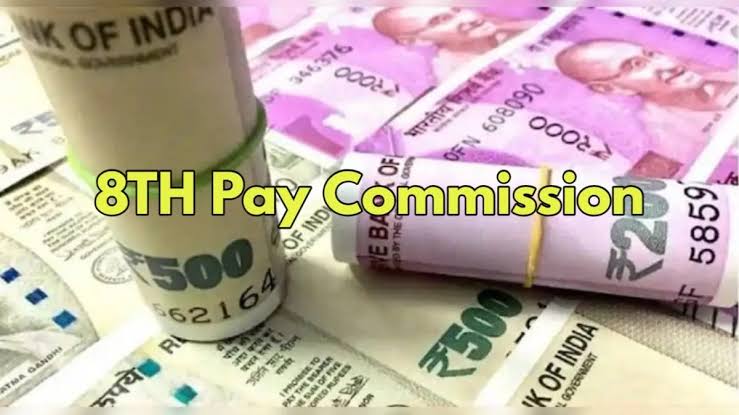
The Indian Government has taken a major step forward in revising pay and pensions for central government employees by formally constituting the 8th Central Pay Commission (8th CPC). After years of anticipation, this latest pay commission aims to overhaul salary structures, allowances, and retirement benefits in line with current economic realities. This comprehensive guide explains who benefits, how much salary could rise, when changes may take effect, and why this matters for millions of government employees and pensioners.
What Is the 8th Pay Commission?
The Pay Commission is a statutory body appointed by the Government of India, traditionally every ten years, to review and suggest revisions to pay scales, allowances, pension and related financial benefits for Central Government employees and pensioners. The 8th Pay Commission succeeds the 7th CPC, whose recommendations remain in effect through December 31, 2025.
The primary objective of the 8th CPC is to ensure government compensation remains fair, competitive, and aligned with rising living costs and modern job expectations. It will also examine retirement benefits, including pensions and family pensions.
Who Is Eligible for the 8th Pay Commission?
The 8th Pay Commission covers several key categories within the government workforce:
- Central Government employees in established civil services roles.
- Central pensioners and family pensioners drawing retirement benefits linked to central pay structures.
- Personnel under structured pay matrices defined by the previous pay commission.
It’s important to note that state government employees are not automatically included in the 8th CPC’s recommendations; state governments must decide independently whether to adopt the central panel’s proposals. Similarly, employees of public sector units (PSUs), autonomous bodies, and statutory organizations benefit only if their respective governing bodies choose to implement the revisions.
Official Timeline & When Salaries May Rise
The Government of India has issued the official notification and approved the Terms of Reference (ToR) for the 8th Pay Commission, giving the panel approximately 18 months to complete its work.
Here’s what is expected:
- 📅 Effective Date (on paper): January 1, 2026 — the date from which revised pay and pension structures are likely to be applicable retrospectively.
- 🕒 Recommendation Submission: By mid-2027 or within the 18-month period post-constitution.
- 💰 Actual Salary & Pension Crediting: Although the new scales may be effective from January 1, 2026, salaries and arrears usually take several months to be processed and credited into employee bank accounts, often stretching into the 2026–27 financial year.
This phased rollout — effective date first, followed by Cabinet approval, then disbursal — is consistent with past pay commissions. It ensures budget planning and administrative preparation but also means employees may wait for the full financial impact.
Expected Salary Hikes & Fitment Factor
While official figures are yet to be announced, preliminary projections and expert estimates suggest substantial increases in pay and pension once the 8th CPC recommendations are implemented.
Key expectations include:
- 🔺 Significant salary increases in the range of 20% to 35% for many government employees, compared to 7th CPC levels.
- 📈 Fitment Factor: A crucial number that determines basic salary increase. Earlier pay panels used fitment factors such as 2.57 under the 7th CPC. Under the 8th CPC, estimates vary, and a fitment factor between 2.15 and above could significantly boost basic pay across salary levels — though the final figure will depend on inflation, fiscal conditions, and other economic variables.
A higher fitment factor benefits employees by raising the basic pay, which then proportionately increases allowances such as House Rent Allowance (HRA) and transport allowances, which are calculated as a percentage of basic salary.
Dearness Allowance (DA) & Allowances Revision
Dearness Allowance (DA) is designed to protect employees’ purchasing power against inflation. Under the 7th CPC, DA had risen progressively with inflation adjustments. Under the 8th Pay Commission framework:
- DA is anticipated to be reset once the new pay structure is implemented (likely starting at zero and recalculated thereafter).
- Other allowances such as HRA, medical allowances, and travel allowances are also expected to be recalibrated based on updated basic pay levels.
Resetting DA ensures fairness across pay levels but also means that initial take-home salary increases may be moderated, as DA is integrated into the new structure before future DA adjustments resume.
What This Means for Pensioners
Pensioners stand to benefit along with serving employees, as pensions are linked to the basic pay and allowances set by the pay commission. The 8th CPC is expected to revise minimum pension levels upwards and review family pension norms — potentially offering enhanced financial security for retirees and their families.
However, the full effect on pension amounts will depend on the final fitment factor and how allowances like DA are restructured under the new system.
Impacts on Employees & Economy
The 8th CPC’s recommendations are not just about pay — they affect spending power, retirement security, and economic activity:
- 💼 Improved income can boost consumer spending across sectors.
- 📊 Fiscal impact: Higher wages and pensions increase government spending, which must be balanced with budget priorities and development goals.
- 🧾 Administrative changes: Payroll systems, budget allocations, and accounting will need to be updated to integrate the new pay matrix and allowances.
Employees are also advised to maintain accurate service and pension documentation to ensure smooth benefits implementation once the recommendations are finalized.
Common FAQs
Q1: When will the 8th Pay Commission’s recommendations take effect?
➡️ Expected to be effective from January 1, 2026, though actual salary arrears and revised payments may hit accounts later in 2026-27.
Q2: Will state government employees benefit?
➡️ Not automatically. States may choose to adopt central recommendations with modifications.
Q3: Is DA merged with basic pay?
➡️ There is no official decision yet on merging DA; it is likely to be reset under the new structure.
The 8th Pay Commission marks one of the most significant salary and pension revision efforts for Central Government employees in India. With eligibility spanning active staff and pensioners, retrospective implementation from January 2026, and projected substantial salary hikes, this pay panel’s outcomes will ripple through government finances and employee welfare alike. While the final figures and exact timing of payouts await formal approval, preparation, patience, and staying updated with official releases will help employees get the most from this historic revision.