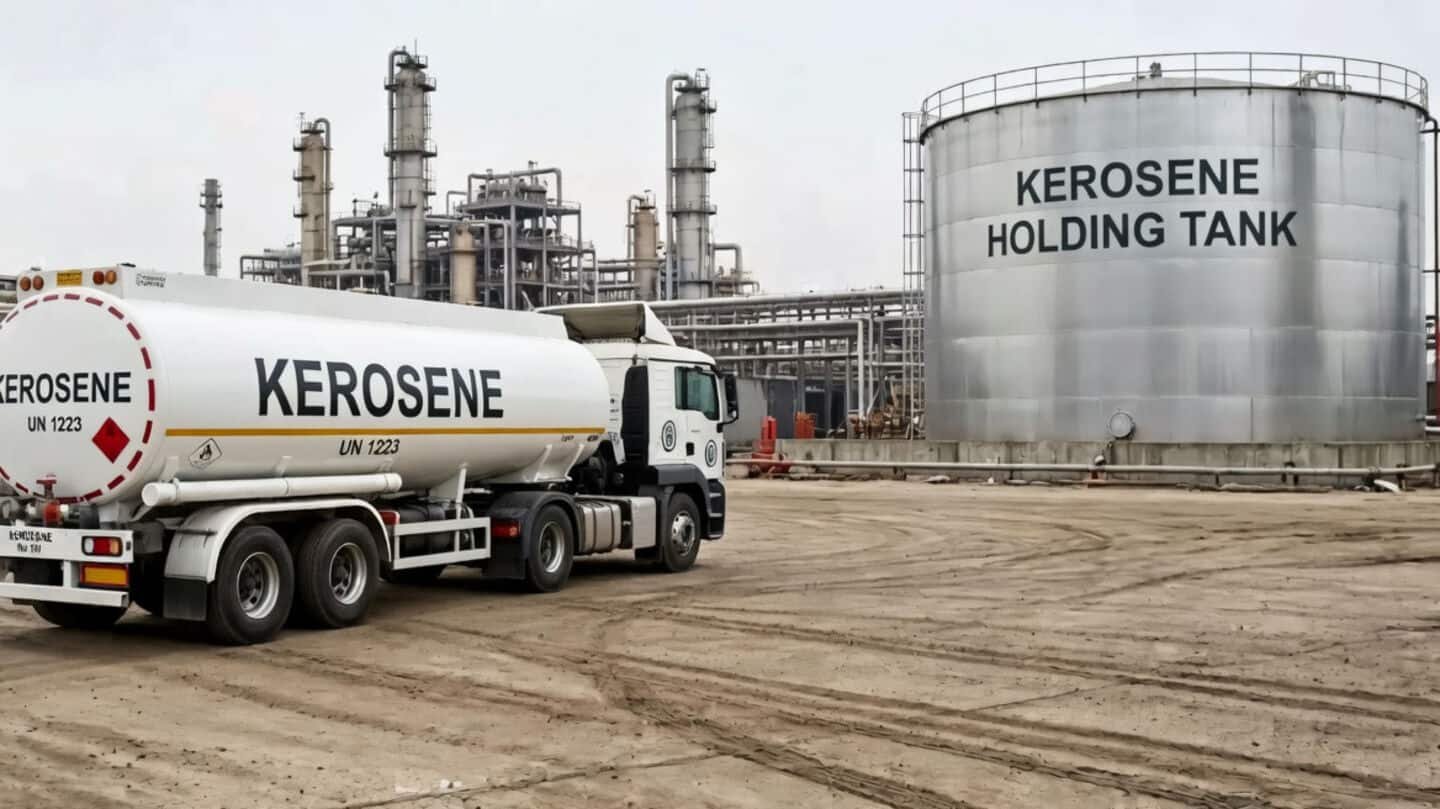
Centre Clears Temporary Kerosene Supply in 21 SKO-Free States/UTs, Including J&K, Ladakh, Amid Global Energy Crisis
Permits storage up to 5,000 litres at designated fuel stations, grants regulatory exemptions for 60 days to ensure supply for cooking and lighting
New Delhi: In view of the prevailing geopolitical situation impacting global energy supplies, the Ministry of Petroleum and Natural Gas has issued a notification allowing temporary distribution of Public Distribution System (PDS) Superior Kerosene Oil (SKO) in 21 SKO-free States and Union Territories, including Jammu and Kashmir and Ladakh.
As per the notification as per news agency Kashmir News Corner — KNC, the Centre has invoked provisions under the Petroleum Act, 1934 and Petroleum Rules, 2002 to grant conditional exemptions and permissions aimed at facilitating quick and efficient supply of kerosene for household cooking and lighting purposes.
Under the new arrangement, a maximum of two designated fuel stations of Public Sector Oil Marketing Companies (OMCs) in each district—preferably Company Owned Company Operated (COCO) outlets—are permitted to store up to 5,000 litres of PDS SKO, even in facilities originally licensed for petrol and diesel storage.
Additionally, agents and dealers have been exempted from obtaining separate licenses for decanting kerosene at these designated stations. Tank vehicles transporting petroleum products have also been granted similar exemptions to enable smoother logistics and distribution.
The government has made it clear that these relaxations are strictly temporary and subject to compliance with safety norms, handling procedures, and operational guidelines laid down by the Petroleum and Explosive Safety Organisation (PESO). Proper records of storage, decantation, and distribution must be maintained and made available for inspection by district authorities.
The notification will remain in force for a period of 60 days from the date of issuance or until further orders, whichever is earlier. The move is aimed at addressing potential shortages and ensuring uninterrupted access to essential fuel in regions where kerosene distribution had previously been phased out. (KNC)