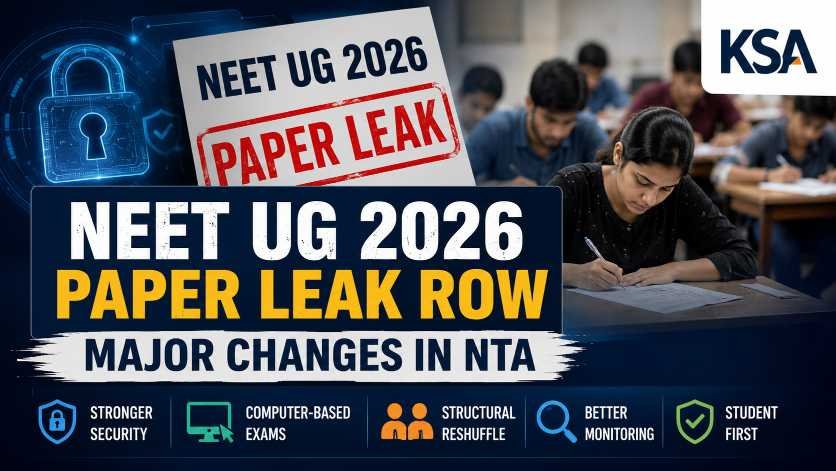
The National Testing Agency (NTA) is undergoing major reforms after the massive controversy surrounding the alleged NEET UG 2026 paper leak. The issue triggered nationwide protests, concerns among students and parents, and intense scrutiny from the Union Government. Following the cancellation of the NEET UG 2026 exam conducted on May 3, the Centre has now initiated a large-scale overhaul of the examination system to restore trust and ensure transparency.
Focus Keyword
NEET UG 2026 NTA Major Changes
NEET UG 2026 Controversy Explained
The controversy began after allegations surfaced that the NEET UG 2026 question paper had been leaked before the examination. Reports claimed that a so-called “guess paper” circulating online matched a large portion of the actual exam paper, especially in Chemistry and Biology sections. Soon after the allegations gained momentum, the National Testing Agency cancelled the examination for more than 22 lakh candidates across the country.
The issue sparked outrage among aspirants who had spent years preparing for the highly competitive medical entrance exam. Political leaders, education experts, parents, and students demanded accountability and strict action against those involved in the alleged leak network.
According to investigation reports, several individuals were arrested in connection with the case, while the Central Bureau of Investigation (CBI) launched a detailed probe into the matter. Authorities reportedly traced digital PDF files and communication chains allegedly used to circulate the leaked paper.
Why The Government Decided To Revamp NTA
The NEET UG paper leak controversy once again raised serious questions over the functioning of the National Testing Agency. This is not the first time NTA has faced criticism regarding examination security and administrative management.
After reviewing the situation, the Union Education Ministry initiated a comprehensive restructuring exercise within NTA. The goal is to strengthen exam security, modernize operations, introduce technology-driven monitoring, and prevent future leaks or irregularities.
Education Minister Dharmendra Pradhan acknowledged that there had been a breach in the “command chain” during the examination process and assured students that strict reforms would follow.
Major Changes Introduced In NTA After NEET UG 2026 Leak
Here are the biggest reforms and structural changes introduced after the controversy:
1. Stronger Security In Question Paper Handling
One of the biggest concerns in the NEET paper leak case was the alleged breach during printing, transportation, and distribution of question papers.
To prevent such incidents in future:
- Multi-layer digital tracking systems are being introduced
- Randomization mechanisms will be strengthened
- Real-time monitoring during transportation will be implemented
- Police supervision and district-level coordination will be enhanced
- Secure handling protocols are being redesigned
The government has reportedly directed NTA to implement a foolproof security mechanism before the re-examination.
2. Computer-Based NEET Exams From Next Year
Perhaps the most significant reform announced is the shift towards fully computer-based examinations for NEET in future sessions.
The Education Ministry believes that online exams can reduce risks associated with physical question papers, printing leaks, and transportation vulnerabilities.
This move could fundamentally change how medical entrance examinations are conducted in India.
Possible Benefits Of Computer-Based NEET
- Better security and encryption
- Reduced chances of paper leaks
- Faster result processing
- Improved transparency
- Randomized question distribution
- Easier monitoring of malpractice
However, students from rural areas have also raised concerns regarding internet infrastructure and accessibility.
3. Structural Reshuffle Inside NTA
Reports suggest that the Centre has already started inducting younger officers and reorganizing senior administrative positions within NTA as part of the restructuring exercise.
The reforms reportedly trace back to earlier recommendations approved in 2024, where multiple senior administrative posts were created to improve accountability and operational efficiency.
The restructuring aims to:
- Improve administrative oversight
- Reduce delays in decision-making
- Increase accountability
- Modernize operational management
4. Parliamentary Review Of Reforms
The Parliamentary Standing Committee on Education is also reviewing the implementation of reforms and the handling of the paper leak controversy.
Senior officials from the Education Ministry and NTA have reportedly been asked to explain the current situation and the status of reform implementation.
This indicates that the issue is now under high-level governmental and parliamentary scrutiny.
5. Increased Surveillance On Digital Platforms
Authorities are also focusing heavily on social media and messaging platforms that allegedly spread leaked papers, fake claims, and misinformation related to NEET.
The government has reportedly involved major technology platforms including Meta, Google, and Telegram to identify suspicious activity and prevent the circulation of fake or leaked content ahead of future exams.
Officials believe that stronger monitoring of online platforms will play a key role in protecting exam integrity.
6. Better Coordination With Local Authorities
The government has directed district administrations and local police departments to play a larger role in exam security.
This includes:
- Secure storage centres
- Better transportation oversight
- Rapid response mechanisms
- Real-time communication systems
The aim is to close operational loopholes at the ground level.
7. Student-Friendly Reforms
After criticism over confusion and stress caused by the cancellation, NTA has also introduced some student-focused measures.
These include:
- Free re-examination arrangements
- Improved communication channels
- Flexible city selection options before exams
- Timely release of admit cards and notices
Education Minister Dharmendra Pradhan stated that students’ futures remain the government’s top priority.
NEET UG 2026 Re-Exam Details
Following the cancellation of the May 3 examination, NTA announced that the NEET UG 2026 re-exam will be conducted on June 21, 2026.
Important Expected Updates
- Fresh admit cards will be issued
- Enhanced security arrangements will be implemented
- Students may get fresh exam city options
- Strict biometric verification is likely
Candidates are advised to rely only on official NTA websites and verified government announcements for updates.
Impact On Students
The cancellation and subsequent reforms have created both anxiety and hope among aspirants.
Challenges Faced By Students
- Mental stress due to uncertainty
- Additional preparation pressure
- Delayed admission process
- Financial burden for some candidates
Positive Side Of Reforms
At the same time, many students and parents believe the reforms were necessary to ensure fairness and credibility in the examination system.
A more transparent and secure examination process could benefit future aspirants significantly.
Public Reaction To The NTA Reforms
The reforms have generated mixed reactions across India.
Many students welcomed the stricter measures and the promise of technological modernization. However, concerns remain regarding:
- Implementation efficiency
- Rural digital accessibility
- Transparency in future exams
- Accountability for previous lapses
On social media platforms and online discussion forums, several aspirants expressed frustration over repeated controversies in national-level entrance examinations.
What Experts Are Saying
Education experts believe that the NEET controversy may become a turning point in India’s entrance examination ecosystem.
Experts argue that merely changing systems may not be enough unless:
- Accountability mechanisms are improved
- Recruitment within NTA becomes more transparent
- Cybersecurity systems are strengthened
- Examination logistics are professionally managed
Many have also suggested independent audits and external monitoring of major national-level examinations.
Will These Reforms Restore Trust?
The biggest challenge before NTA now is rebuilding public confidence.
The paper leak controversy damaged the credibility of one of India’s most important entrance examinations. While the announced reforms appear comprehensive, their success will ultimately depend on implementation.
If executed properly, these reforms could modernize the examination system and reduce the possibility of future leaks. However, students and parents will likely continue to closely monitor how the new system functions during upcoming examinations.
The NEET UG 2026 paper leak controversy has triggered one of the biggest reforms in the history of the National Testing Agency. From enhanced security measures and digital monitoring to structural reshuffling and the possibility of computer-based exams, the government is attempting to completely overhaul the system.
While these changes are aimed at ensuring fairness and restoring trust, millions of students now hope that future examinations will truly become transparent, secure, and stress-free.
For now, all eyes remain on the upcoming NEET UG 2026 re-examination and how effectively the newly introduced reforms are implemented across the country.
Source: NDTV