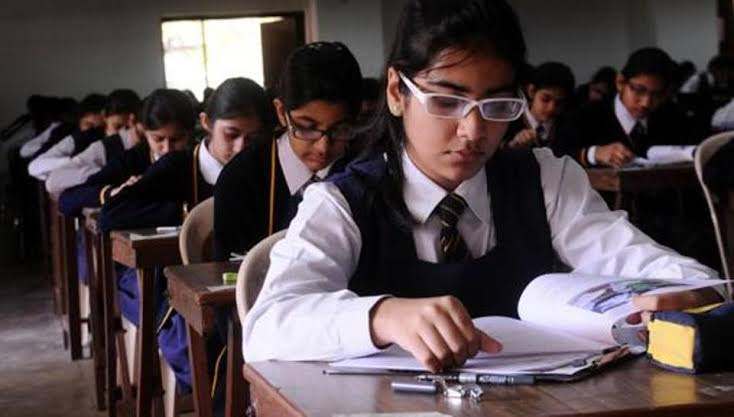
The Central Board of Secondary Education has introduced a major reform in the secondary school curriculum by making the study of three languages compulsory for students of Classes 9 and 10 from July 1, 2026. The move is part of the implementation of the National Education Policy (NEP) 2020 and the National Curriculum Framework for School Education (NCF-SE) 2023.
According to the latest CBSE circular, students studying in Classes 9 and 10 during the 2026–27 academic session must now study three languages identified as R1, R2, and R3. Importantly, at least two of these languages must be native Indian languages.
The decision marks one of the biggest curriculum changes in recent years and is expected to significantly influence language learning, school teaching patterns, and board examination structures across India.
What Is the New CBSE Three-Language Policy?
Under the revised language policy, all students entering Class 9 from July 1, 2026, will have to study three languages compulsorily. The three languages will be categorized as:
- R1 (Language 1)
- R2 (Language 2)
- R3 (Language 3)
CBSE has clarified that:
- At least two languages must be Indian languages
- Students may choose a foreign language only if the remaining two are Indian languages
- Schools must ensure proper implementation of multilingual education under NEP 2020
This new policy aligns with the broader goal of promoting multilingualism and strengthening Indian languages in school education.
Why Has CBSE Introduced This Change?
The reform is directly linked to the implementation of the National Education Policy (NEP) 2020, which emphasizes:
- Multilingual education
- Promotion of regional and Indian languages
- Cognitive development through language diversity
- Flexibility in language learning
The National Curriculum Framework for School Education (NCF-SE) 2023 also recommends that students should continue learning three languages up to the secondary stage.
CBSE stated that the revised scheme was introduced after reviewing the newly released NCERT curriculum for Classes 9 and 10 for the 2026–27 session.
Two Indian Languages Now Mandatory
One of the biggest highlights of the policy is that students must study at least two Indian languages.
This means:
- English can still be studied
- Hindi can be selected
- Regional languages such as Kashmiri, Dogri, Tamil, Telugu, Bengali, Marathi, Urdu, Punjabi, Malayalam and others can be chosen
- Foreign languages like French, German, Japanese, Spanish, or Russian can only be selected as the third language if two Indian languages are already being studied
The move is aimed at preserving linguistic diversity and encouraging students to remain connected with Indian culture and regional identities.
Will There Be a Board Exam for the Third Language?
CBSE has clarified that there will be no Class 10 board examination for the third language (R3) for now.
The third language will instead be:
- Assessed internally by schools
- Evaluated through school-level examinations and assessments
- Included in the curriculum but excluded from external board examination structure
This announcement has brought relief to many students and parents concerned about additional board exam pressure.
However, students will still need to successfully complete the third language requirement as part of their academic progression.
What Are R1, R2 and R3?
The revised CBSE framework uses three categories for languages:
| Language Category | Meaning |
|---|---|
| R1 | Primary language studied by the student |
| R2 | Second language chosen at a different proficiency level |
| R3 | Third compulsory language introduced under NEP |
CBSE has also clarified that:
- The same language cannot be repeated at multiple levels
- R1 and R2 must be different languages
- Schools must provide language choices according to available resources
What Languages Can Students Choose?
Students will have a broad list of language options available under the revised curriculum.
Indian Languages
Students may choose from:
- Hindi
- Urdu
- Kashmiri
- Dogri
- Punjabi
- Bengali
- Marathi
- Tamil
- Telugu
- Kannada
- Malayalam
- Gujarati
- Assamese
- Sanskrit
- Konkani
- Maithili
- Santali
- Manipuri
- Bodo
- Nepali
- Sindhi
- Odia and more
CBSE has expanded language offerings to include all 22 scheduled Indian languages.
Foreign Languages
Students may also opt for:
- French
- German
- Japanese
- Russian
- Spanish
- Korean
- Arabic
- Persian
But only under the condition that two Indian languages are already included in the student’s language combination.
Transitional Arrangements for Schools
Since the academic session 2026–27 has already started in many schools, CBSE has announced transitional arrangements for implementation.
These include:
- Temporary textbook support
- Interim teacher-sharing models
- Flexible arrangements for schools lacking language teachers
- Gradual adaptation of syllabus and assessments
Schools have also been asked to finalize their language offerings and implementation plans quickly to avoid confusion among students.
Impact on Students
The new policy will significantly affect students in several ways.
Positive Impacts
- Better multilingual skills
- Stronger understanding of Indian languages and culture
- Enhanced communication abilities
- Cognitive benefits associated with multilingual learning
- Wider academic flexibility
Challenges
- Additional language workload
- Difficulty in schools with limited language teachers
- Concerns from students already managing heavy academic schedules
- Rural and smaller schools may face infrastructure challenges
Despite these concerns, CBSE believes the policy will strengthen educational quality in the long term.
Impact on Schools and Teachers
Schools across India will now need to:
- Hire additional language teachers
- Offer more Indian language options
- Restructure timetables
- Introduce multilingual learning support
- Conduct internal assessments for R3
Teacher shortages remain a major concern, especially in remote areas. CBSE has acknowledged this issue and suggested interim arrangements until schools can fully adapt.
What About Existing Students?
The revised rule primarily applies to students entering Class 9 from July 1, 2026.
CBSE has indicated that:
- Current batches may continue under transitional norms
- Schools will gradually shift toward complete implementation
- Full integration of the three-language system will continue in phases
Earlier reports had suggested a phased rollout beginning from Class 6 and extending to Class 10 by 2030–31.
Is English Still Compulsory?
There has been confusion regarding the status of English under the new language policy.
CBSE has not removed English from the curriculum. Instead:
- English can continue as one of the three languages
- Students must additionally study at least one more Indian language
- Foreign languages are treated separately under the revised framework
Therefore, English remains important, but the policy now places stronger emphasis on Indian languages as well.
What NEP 2020 Says About Language Learning
The National Education Policy 2020 strongly supports multilingualism.
The policy states that:
- Children learn concepts better in multiple languages
- Mother tongue and regional language education should be encouraged
- Students should be exposed to Indian linguistic diversity
- Language learning helps improve cognitive development and cultural awareness
The CBSE policy is essentially an institutional implementation of these recommendations.
Concerns Raised by Parents and Experts
Several education experts and parents have expressed mixed reactions.
Supporters Say:
- It promotes Indian languages
- It strengthens cultural identity
- It improves cognitive flexibility
- It supports holistic education
Critics Say:
- Students already face academic burden
- Schools lack trained teachers
- Sudden implementation may create confusion
- Urban schools may adapt faster than rural institutions
Some experts have also requested more clarity regarding:
- Internal assessment formats
- Textbook availability
- Teacher recruitment plans
- Board examination patterns after 2030
Future of the Three-Language Formula
CBSE is expected to gradually expand the implementation of the policy in coming years.
Future possibilities include:
- Standardized R3 assessments
- Inclusion of vocational and interdisciplinary language modules
- More digital learning resources
- Integration with AI-based multilingual education systems
By 2030–31, the board may fully implement the three-language framework across all secondary classes under NEP guidelines.
Key Highlights of the New CBSE Language Policy
- Three languages compulsory for Classes 9 and 10 from July 1, 2026
- At least two languages must be Indian languages
- No Class 10 board exam for the third language
- Foreign languages allowed only alongside two Indian languages
- Policy aligned with NEP 2020 and NCF-SE 2023
- Schools to implement transitional arrangements
- Internal assessment for R3 language
- Expanded list of Indian language options
The new CBSE three-language policy marks a historic transformation in India’s secondary education system. By making three languages compulsory for Classes 9 and 10, the board aims to promote multilingualism, preserve Indian linguistic heritage, and align school education with the broader vision of NEP 2020.
While the move has generated debate regarding implementation challenges and academic pressure, it also opens opportunities for students to develop stronger communication skills and deeper cultural understanding.
As schools prepare for the July 1, 2026 rollout, students, parents, and educators will closely watch how effectively the new system is implemented across the country.
For the official report and updates, visit and .