Monday, April 13, 2026
Advertisementspot_img
Home Blog Page 116

RRB JE Recruitment 2025: Deadline Extended and Vacancies Increased

0

RRB JE Recruitment 2025: Deadline Extended and Vacancies Increased

The RRBs have announced a significant update to the ongoing recruitment process for technical posts in the Indian Railways: the application deadline has been extended and the total number of available vacancies has been increased. This fresh development provides additional time and opportunity for interested candidates to participate.

What’s New: Extension and Vacancy Increase

The recruitment drive originally invited applications for the posts of Junior Engineer (JE), Depot Material Superintendent (DMS), and Chemical & Metallurgical Assistant (CMA). Under the updated schedule:

  • The online application window is now open until 10 December 2025 (11:59 PM).
  • The deadline for paying the application fee has been moved to 12 December 2025.
  • The total number of vacancies has been revised upward: from 2,569 to 2,588.
  • Additional openings have been created in specific production units such as at the Rail Coach Factory, Kapurthala (under one RRB zone) and the Integral Coach Factory, Chennai (under another zone).

These changes reflect both the Railways’ intention to widen the reach of the drive and give candidates extra time to apply or update their preferences.

Why is the Update Significant?

For many aspirants, these revisions matter in multiple ways:

  1. More time to apply – The extension means that candidates now have additional days to prepare their documents, review eligibility, and complete the application process. This can be especially helpful for those who were still arranging certificates, scanning photographs or signatures, or just deciding whether to apply.
  2. More openings, slightly better odds – Although the increase from 2,569 to 2,588 is modest, it still offers extra seats across the technical posts, which may reduce competition pressure ever so slightly.
  3. Flexibility in preferences – The recruitment notification also includes windows for “modification” of certain details (post-preferences, production unit or zonal allocations) for already-registered candidates, offering some chance to revise choices without starting afresh.

Who Can Apply: Eligibility Overview

While the complete detailed eligibility guidelines are part of the official notification, the broad criteria for this drive include:

  • An age window (typically 18 – 33 years for general category) with relaxations for reserved categories.
  • Educational qualification relevant to the post: for JE and related technical posts, a diploma or degree in engineering (for example Mechanical, Electrical, Civil, Computer Science/IT, etc.) is required; for the CMA post, a graduate in Physics & Chemistry or equivalent may be needed.
  • Indian citizenship (in most cases) and other standard norms such as good character, medical fitness and no pending criminal/disciplinary actions.

Because the RRB drive covers multiple zones and production units, candidates must ensure that they apply only for the post(s) for which they are eligible, and that their credentials align with the specific discipline.

Application Process: What Candidates Should Do

Here is a step-by-step guide for those interested in applying:

  1. Log in / Register on the official portal (region-specific RRB website) and create an account if not already done.
  2. Read the full notification — download and study the PDF containing post‐wise vacancy details, eligibility norms, age criteria, fee structure, exam pattern and zonal distribution.
  3. Fill the application form — provide personal details, educational qualification, category status, choices of RRB/Production Unit/Zonal Railway, upload scanned photograph and signature as per specifications.
  4. Pay application fee before the fee‐payment deadline (now extended to 12 Dec 2025). To avoid last‐minute issues, candidates should complete payment a few days in advance.
  5. Take a print‐out of the submitted application form and fee receipt for future reference.
  6. Use the modification window (for those who already applied): from 25 Nov to 10 Dec 2025 registered candidates can modify their choices (post, zonal railway/production unit) without payment of extra fee; a second paid modification window will run from 13 Dec to 22 Dec 2025, in which some changes can be made at a cost, albeit with restrictions (for example, account details or selected RRB may not be changed).
  7. For PwBD (Persons with Benchmark Disability) candidates requiring a scribe: there is a specific scribe‐detail submission window (23 Dec to 27 Dec 2025) through the respective RRB portal.

Selection Process & Important Elements

The selection for the JE/DMS/CMA posts typically follows a multi‐stage pattern:

  • Computer Based Test (CBT) I — objective type questions, covering technical discipline, general awareness, reasoning, basic mathematics etc.
  • Computer Based Test (CBT) II — for candidates who qualify CBT I; often a higher‐level technical paper specific to discipline + aptitude.
  • Document Verification & Medical Examination — successful candidates undergo document scrutiny and medical fitness check as per Railways norms.
  • Merit List & Allocation — final allocation is based on merit (score + category + preferences) and available vacancies.

The Railways emphasise that the process is fully computerised and strictly based on merit; candidates are warned not to fall prey to touts or agents promising jobs in exchange for money.

Strategic Preparation Tips for Candidates

Given the revised timeline and updated vacancies, here are a few actionable tips:

  • Make use of extended time: With the deadline moving to 10 Dec, candidates have some breathing space — use it to double‐check eligibility, rectify any discrepancies in certificates, get photographs/signatures appropriately scanned and uploaded, and ensure fee payment well in advance.
  • Check branch/zone-wise vacancy list: The increase in vacancies may not be uniform across all zones or production units—some zones may have seen bigger increases. Applicants should review the zone/branch distribution to pick preferences intelligently.
  • Focus on discipline‐specific technical preparation: Given that JE/CMA/DMS posts require technical knowledge (engineering branches or chemistry/physics), dedicate time to brush up on core subject fundamentals (mechanical, electrical, civil, electronics, computer science etc) alongside general aptitude.
  • Practice previous year papers or mock tests: Even if you’re an engineering graduate, the format of CBT (objective questions, negative marking typically 1/3 for wrong answers) requires strategy. Practice time management, accuracy and elimination techniques.
  • Keep documents and certificates in order: The modification windows allow some revisions but not all. Ensure schooling, diploma/degree, category certificate (if any), disability certificate (if PwBD), photograph/signature meet specifications.
  • Avoid last‐minute hurdles: The fee payment deadline is 12 Dec; don’t wait until the last day when server traffic may be high. Also ensure you take a print/scroll of the submission acknowledgement.
  • Stay safe from fraud: Since the Railways have reiterated that the process is computerised and merit‐based, candidates should avoid paying any money to agents/cartels. Save login credentials, avoid sharing passwords, and use official websites.

What Remains Unchanged & Candidates Must Know

It is important to note that apart from the updated deadlines and increased vacancies, all other terms and conditions of the original notification remain unchanged. This means: the original educational norms, age criteria, reservation rules, CBT pattern, fee structure (unless separately notified) remain as before. Candidates must check the notification they initially downloaded, mark any updates or corrigenda, and proceed accordingly.

Additionally, once the application window closes, there will be no further extension or reopening (unless extraordinary circumstances arise). So candidates should take the extension as a final opportunity rather than assume further chances will come.

Timeline Summary (Revised)

  • Application start date: (already active)
  • Last date for online application submission: 10 December 2025 (11:59 PM)
  • Last date for application fee payment: 12 December 2025
  • First modification window (no extra fee): 25 Nov 2025 to 10 Dec 2025
  • Second modification window (with fee): 13 Dec 2025 to 22 Dec 2025
  • Scribe details submission for eligible PwBD candidates: 23 Dec to 27 Dec 2025
  • Vacancy count: increased to 2,588 posts in total.

Why This Recruitment Matters

A technical recruitment drive of this scale—across engineering disciplines for roles such as Junior Engineer, Depot Material Superintendent and Chemical & Metallurgical Assistant—offers significant opportunities:

  • For fresh engineering graduates or diploma holders, it is a chance to join one of India’s largest organisations in the public sector.
  • The roles are spread across multiple zones and production units of Indian Railways, potentially offering diverse postings and growth prospects.
  • With increased vacancies, competition may marginally ease compared to initial expectations, and the extended timelines give candidates a chance to prepare more thoroughly.
  • For the Railways, this drive addresses technical manpower needs in engineering and production units, signalling renewed focus on capacity building and technical infrastructure.

Final Word

If you are eligible and interested in the JE/DMS/CMA recruitment under the RRBs, now is a good time to act: take advantage of the extended deadline, review your eligibility thoroughly, complete your application carefully, and begin intensive preparation for the technical and aptitude tests ahead. With 2,588 posts on offer and a comprehensive timeline, this recruitment offers both promise and challenge — but with disciplined preparation and timely submission, you can put yourself in a strong position.

JKSSB Extends Last Date for Junior Assistant & Stenographer Online Applications till November 25, 2025

0

JKSSB Extends Last Date for Junior Assistant & Stenographer Online Applications till November 25, 2025

The Jammu & Kashmir Services Selection Board (JKSSB) has extended the last date for submission of online application forms for the recruitment of Junior Assistant, Junior Scale Stenographer, and Junior Stenographer posts under various UT/Divisional/District cadre departments in J&K.

The extension has been granted for the posts advertised under Notification No. 08 of 2025 dated 27 September 2025.

The initial deadline for online applications was November 18, 2025. However, following numerous representations from candidates seeking additional time to complete their registration process, the Board examined the matter and approved an extension.

According to the official notice issued today, the new last date to apply online is November 25, 2025.


JKSSB Advisory to Candidates

The Board has advised aspirants to submit their applications well before the closing date to avoid any issues like:

  • Website disconnection
  • Server load during peak hours
  • Login errors due to heavy traffic

“Candidates are advised, in their own interest, to submit online applications much before the closing date and not to wait till the last date,” the notice reads.


Details at a Glance

Particulars Details
Recruitment Board Jammu & Kashmir Services Selection Board
Posts Junior Assistant, Junior Scale Stenographer, Junior Stenographer
Notification Number 08 of 2025
Earlier Last Date November 18, 2025
Extended Last Date November 25, 2025
Mode of Apply Online

Official Statement

The notice has been issued by Atul Kumar (JKAS), Secretary, JKSSB on November 17, 2025.


📌 Final Reminder

Eligible candidates who have not yet applied are urged to complete their application process before the extended deadline to avoid last-minute technical complications.

DSEK Warns Pvt Schools to Follow FFRC Fee Norms; CEOs to Ensure Strict Field Verification

0

DSEK Warns Pvt Schools Against Displaying Unapproved Fee Structures

CEOs directed to conduct field verification; institutions told to follow FFRC norms strictly

Srinagar, Nov 17: The Directorate of School Education Kashmir (DSEK) has cautioned all government-recognized private schools against publishing fee structures that differ from those approved by the J&K Fee Fixation and Regulation Committee (FFRC).

As per a circular issued by Joint Director North, Hakeem Tanveer Ahmad (JKAS) as per news agency Kashmir News Corner — KNC, the department has received reports that some private institutions are uploading fee details on their apps and websites that do not match the FFRC-approved rates, which the department has termed a serious violation.

The circular instructs the Chief Education Officers of Kupwara, Baramulla and Bandipora to deploy field teams to scrutinize the fee structures displayed by every private school to ensure they align with FFRC approval.

It also directs the CEOs to collect written undertakings from the heads of all such schools, certifying that they have adhered to the approved structure and have not deviated from the notified rates on any platform.

The circular further reiterates that no private school is permitted to charge tuition, transport, or annual fees beyond what has been sanctioned by the FFRC. (KNC)

Kashmir Education Crisis: 360 of 540 Teacher Posts Vacant in Kulgam, Half of Hr Secondary Schools Without Principals

0

Kashmir’s Crumbling Education System

360 out of 540 teacher posts vacant in Kulgam; 3 out of 6 Hr Secondaries without Principals

Srinagar: Hundreds of teaching and non-teaching posts continue to lie vacant in government schools across Jammu and Kashmir, crippling the education system and leaving students to bear the consequences of official apathy.

According to the news agency—Kashmir News Observer (KNO), the situation in South Kashmir’s Kulgam district paints a grim picture.

Scores of primary, middle, high and higher secondary schools are functioning without adequate staff, depriving students of the attention and guidance that parents expect when they send their children to school.

Official data reveals that Kulgam has 540 educational institutions, including 26 higher secondary schools, 56 high schools, 308 middle schools and 150 primary schools.

Although these institutions are shown as “fully functional” on paper, the reality on the ground tells a different story. At least 360 teaching posts remain vacant across these schools, severely affecting classroom learning and overall school functioning.

Kulgam district is divided into six education zones, but half of them have been functioning without Zonal Education Officers (ZEOs) for an extended period. The absence of administrative heads has weakened school supervision, planning, and day-to-day management, directly affecting teaching quality and student performance.

At the higher secondary level, the crisis runs deeper. Out of 26 higher secondary schools, four continue to operate without permanent principals. Institutions like Government Higher Secondary School D.H. Pora and others remain headless, making it difficult to maintain discipline or ensure smooth academic functioning.

The situation is no better in the high schools, many of which have been without headmasters for years. The absence of headmasters has hit both academic and administrative aspects of these schools, lowering teaching standards and hampering student progress.

Adding to the crisis, over 313 non-teaching posts, including clerks and support staff, remain unfilled across the district. The shortage has disrupted vital functions such as cleanliness, record-keeping, examination preparation, and maintenance of laboratories and libraries.

Educationists and parents alike express concern over the prolonged neglect, warning that if the vacancies are not filled urgently, Kulgam’s entire education system could face a serious breakdown. “These are not just numbers but reflect the future of our children. The government must address this on a priority basis,” a local teacher told KNO.

Officials from the education department have so far maintained that efforts are underway to streamline staffing, but the ground reality continues to show otherwise. With each passing year, students in government schools, particularly those from poor families, face the brunt of this administrative vacuum with their education, discipline and future prospects hanging in the balance—(KNO)

Kashmir’s Power Demand Surges Past 1900 MW as Local Generation Drops Nearly 75%

0

Kashmir peak power demand crosses 1900MW mark

‘Local generation reduces by nearly 75%’

Srinagar, Nov 17: As the mercury plummets to sub-zero, peak power demand in Kashmir has crossed 1900 Megawatts mark while the power generation from local plants has reduced by nearly 75 percent.

Officials informed the news agency—Kashmir News Observer (KNO) that in the past 24 hours, there was a peak power load of 1925 MWs in the Kashmir division. “However, there was an average power load of 1566 MWs during these 24 hours.”

It also said that in the Jammu division, there was a peak power load of 1119 MWs and 885 MWs on an average.

About the power generation from the local power plants of Jammu and Kashmir, the official said that the generation was ranging from 280MWs to 350-380 MWs.

On Monday, power generation plants in Baglihar, PDC Jammu and other Independent Power Producers (IPP) in Kashmir were ranging from 300-380 MWs.

Earlier, during the peak season, Jammu and Kashmir was generating over 1100 MWs of power from the total generation capacity of 1197.4 MW.

In the last week of October, the official had informed KNO that there were additional 800 MWs allocated from the centre. “From this year, we have 1300 MW from the central pool. We have started banking with other states.”

Pertinently, till the third week of February,-2025 an official had said that Jammu and Kashmir was relying on more than 85 percent of coal and solar power amid acute deficit of hydro power generation.

Officials of PDD department had claimed that local hydro power generation from the local power plants have reduced by nearly 90 percent.

An official had informed that “At present Jammu and Kashmir is 85-90 percent dependent on coal and solar energy that is being procured from the other states because as of now we don’t have a local power generation.”—(KNO)

JKBOSE Examination Form 2025: Class 10th, 11th & 12th Annual Regular Exam Form Schedule (PDF Download), Jammu Division

0

📢 JKBOSE Examination Form 2025: Class 10th, 11th & 12th Annual Regular Exam Form Schedule (PDF Download)

The Jammu and Kashmir Board of School Education (JKBOSE) has officially released the schedule for online submission of examination forms for Class 10th, 11th & 12th Annual Regular Examination 2025 for Summer Zone areas of Jammu Division. Students currently enrolled in JKBOSE-affiliated institutions are eligible to apply within the prescribed dates.

This article provides a complete guide to form submission dates, fee structure, late fee schedule, eligibility, instructions, and the official PDF download link.


🏫 What is the JKBOSE Examination Form 2025?

Every year, JKBOSE conducts the Annual Regular Board Examination for secondary (10th) and higher secondary (11th & 12th) classes. Students are required to fill examination forms online through their institutions before the last date to appear in the board exams.

For the year 2025, JKBOSE has issued the complete exam form submission schedule along with the fee structure for:

✔ Class 10th
✔ Class 11th
✔ Class 12th

The forms are to be submitted through schools/institutes and authenticated by respective Sub/Branch offices of JKBOSE.


📥 Official Notification PDF Download

Students can download the complete PDF notification directly from the official website:

🔗 PDF Link: https://jkbose.nic.in/pdf/SZNotification of 10th11th12th.pdf
(If the link does not open directly, copy and paste into browser)


📅 JKBOSE Class 10th Examination Form 2025 – Dates & Fees

✔ Normal Fee Schedule

Category Fee Start Date Last Date
Students with 5 compulsory subjects Rs. 1240/- 19-11-2025 03-12-2025
Students with additional/optional subjects (5+) Rs. 1460/- 19-11-2025 03-12-2025

⏰ Late Fee Schedule (Class 10th)

Phase Days Fee Structure Total Fee Start Date Last Date
1st Late Fee 07 Days ₹1240 + ₹810 ₹2050 04-12-2025 10-12-2025
1st Late Fee (With Optional Subjects) ₹1460 + ₹810 ₹2270 04-12-2025 10-12-2025
2nd Late Fee 07 Days ₹1240 + ₹2085 ₹3325 11-12-2025 17-12-2025
2nd Late Fee (With Optional Subjects) ₹1460 + ₹2085 ₹3545 11-12-2025 17-12-2025

🎓 JKBOSE Class 11th & 12th Examination Form 2025 – Dates & Fees

✔ Normal Fee Schedule

Class Category Fee Start Date Last Date
11th & 12th With 5 compulsory subjects ₹1435 + ₹230 (Registration Fee) excluding Practical ₹1665/- 19-11-2025
11th & 12th With additional subjects ₹1690 + ₹230 excluding Practical ₹1920/- 19-11-2025

⏰ Late Fee Schedule (Class 11 & 12)

Phase Days Category Fee Structure Total Fee Start Date Last Date
1st Late Fee 07 Days For 5 subjects only ₹1435 + ₹230 + ₹810 ₹2475/- 04-12-2025 10-12-2025
1st Late Fee Additional subjects ₹1690 + ₹230 + ₹810 ₹2730/- 04-12-2025 10-12-2025
2nd Late Fee 07 Days For 5 subjects only ₹1435 + ₹230 + ₹2085 ₹3750/- 11-12-2025 17-12-2025
2nd Late Fee Additional subjects ₹1690 + ₹230 + ₹2085 ₹4005/- 11-12-2025 17-12-2025

📌 Note: ₹100 per candidate will be charged as Practical Subject Fee where applicable.


🧾 Who Can Apply For JKBOSE Examination Form 2025?

Eligibility Criteria:

✔ Students currently enrolled in JKBOSE-affiliated schools
✔ Students eligible for Annual Regular Session Feb–March 2026
✔ All Summer Zone students of Jammu Division

Institutions must check student eligibility before filling forms.


📝 Instructions for Students & Institutions

To ensure a smooth form submission process, JKBOSE has listed important guidelines:

🔶 For Institutions:

  • Generate a Checklist from their respective School Accounts
  • Submit Checklist to Sub/Branch office within 10 days
  • Ensure correction of student data before final submission

🔶 For Students:

  • Verify Name, Parent Details, Subjects, Category
  • Keep registration number handy
  • Confirm payment and submit before deadlines
  • Contact school authorities for issues—not JKBOSE directly

🚫 Late Submission Consequences

If students miss the normal deadline:

  • Must pay additional late fees
  • May risk form rejection if deadlines are fully crossed
  • No exam roll number will be issued without form submission

🗓 JKBOSE 2025 Exam Schedule – Expected Dates

While the exam dates will be announced later, previous trends suggest:

Class Expected Exam Start
Class 10th February 2026
Class 11th March 2026
Class 12th March 2026

Detailed date sheet will be published separately.


💡 Tips for Students Before Form Submission 2025

Tip Why It Matters
Verify subjects Wrong subjects = not allowed in exam
Attach required documents Registration & school verification required
Pay before deadline Avoid late fee burden
Download a receipt For future reference

📌 Importance of JKBOSE Examination Form 2025

Filling and submitting the board exam form is mandatory:

  • Acts as official registration for board exams
  • Required for roll number slip generation
  • Verified record for marksheet & certificates

Missing the deadlines may lead to:

❌ Missing the entire academic year
❌ No chance to appear in Regular Exams
❌ Additional financial penalty

So students must take this process seriously.


📎 Useful Links For Students

Resource Link
Official JKBOSE Website https://jkbose.nic.in
Official Notification PDF https://jkbose.nic.in/pdf/SZNotification of 10th11th12th.pdf
Latest Updates Check News Section on JKBOSE website

📌 Final Summary

Feature Details
Classes 10th, 11th & 12th
Region Jammu Division – Summer Zone
Session Annual Regular 2025
Form Submission Mode Online through Schools
First Form Date 19 November 2025
Last Form Date (Without Late Fee) 03 December 2025
Final Last Date (With Late Fee) 17 December 2025

✨ Conclusion

The JKBOSE Examination Form 2025 notification is a crucial update for all students preparing for Board Exams this year. Students and schools should carefully follow the schedule and guidelines to avoid late fees and ensure smooth exam eligibility.

Keeping track of form submission deadlines and required fees will help avoid unnecessary stress later. Don’t wait until the last date — complete your form submission as early as possible!

South Eastern Railway Apprentice Recruitment 2025 – Apply for 1785 Vacancies | Registration Starts Tomorrow!

0

South Eastern Railway Apprentice Recruitment 2025

The South Eastern Railway (SER) has opened a major recruitment drive in 2025 for apprenticeships — an excellent opportunity for technically trained youth looking to begin a career in one of India’s key rail networks. In this article we cover all aspects: eligibility, vacancies, how to apply, selection process, trade-wise breakdown, important dates, and tips for success.


Why this recruitment matters

The railway sector continues to be one of the most important public-sector employment zones in India, offering stable work, technical training and growth possibilities. The South Eastern Railway zone covers a large region and includes multiple workshops, loco sheds, carriage & wagon depots, and heavy-engineering units. By offering apprenticeships, SER provides a launch pad for young people to gain trade-specific training, hands-on experience, and be part of a large infrastructure organisation.

In 2025, SER is offering 1,785 apprentice posts across various units and trades. This volume of vacancies makes it a significant opportunity for fresh ITI holders and matriculation pass candidates who are eligible. The fact that selection is merit-based (rather than exam-based) further increases accessibility for many aspirants.

The apprenticeship scheme not only helps candidates build skills but also aligns with India’s broader skill development initiatives. For young people who may not yet have a full degree, this opens a tangible pathway into a technical career.


Key facts at a glance

Parameter Detail
Number of vacancies 1,785 posts
Application start date 18 November 2025
Application end date 17 December 2025
Qualification required Matriculation (10th class) with minimum 50% + ITI certificate in relevant trade
Age limit 15-24 years (as on 1 January 2026)
Application fee ₹100 for General/OBC; SC/ST/PwD/Women exempt
Selection method Trade-wise merit list based on matric percentage

Detailed vacancy breakdown

The 1,785 vacancies are distributed across different workshops, sheds and depots under the SER zone. Some of the unit-wise numbers (for illustration) are:

  • Kharagpur Workshop: 360 posts
  • Signal & Telecom Workshop, Kharagpur: 87
  • Track Machine Workshop, Kharagpur: 120
  • Carriage & Wagon Depot, Kharagpur: 121
  • Diesel Loco Shed, Kharagpur: 50
  • Sr. DEE (G) Kharagpur: 90
  • EMU Shed / Electrical TPKR: 40
  • Electric Loco Shed Santragachi: 36
  • Sr. DEE (G) Chakradharpur: 93
  • Carriage & Wagon Depot, Chakradharpur: 65
  • Electric Loco Shed TATA: 72
  • Engineering Workshop Sini: 100
  • Track Machine Workshop Sini: 7
  • Electric Loco Shed Bondamunda: 50
  • Diesel Loco Shed Bondamunda: 52
  • Sr. DEE (G) Adra: 30
  • Carriage & Wagon Depot, Adra: 65
  • Diesel Loco Shed BKSC: 33
  • Electric Loco Shed ROU: 25
  • Carriage & Wagon Depot Ranchi: 30
  • Sr. DEE (G) Ranchi: 30
  • TRD Depot/Electrical Ranchi: 10
  • SSE (Works) Engg Ranchi: 10

These numbers illustrate the wide spread of units and trades within the zone, offering choices across maintenance, electrical, mechanical, signal & telecom, loco sheds and depots.


Eligibility criteria

Educational qualification

To apply, candidates must satisfy:

  • Have passed matriculation (10th class) under the 10+2 system from a recognised Board, securing at least 50% aggregate marks (excluding additional/optional subjects).
  • Possess an ITI certificate (recognized by NCVT/SCVT) in the trade in which the apprenticeship is to be done.

This dual requirement ensures the candidate has both a basic academic foundation and trade-specific training.

Age limit

  • The minimum age is 15 years as on 1 January 2026.
  • The upper age limit is 24 years as on that date.
  • Age as recorded in the matriculation certificate or birth certificate will be reckoned.
  • Age relaxation is applicable for reserved categories as per Government rules (SC/ST/OBC/PwD etc.).

Keeping track of the age cut-off is important (e.g., someone born after 1 January 2001 would be under the age limit for 2025 recruitment if eligible).

Nationality & other conditions

  • Applicant must be an Indian citizen.
  • Must satisfy any other conditions prescribed in the official notification (such as medical fitness, character verification etc.).
  • There is no specified prior work experience requirement (as this is an apprenticeship scheme).

Selection process

The selection for these apprenticeship posts is done purely on a merit-list basis trade-wise (i.e., within each trade category). Key features:

  • The basis for merit is the percentage of marks obtained in matriculation (10th class) across all subjects. There is no weightage for any particular subject (such as Maths or Science) or any separate test.
  • Only candidates who have secured the minimum of 50% in matric are eligible to have their marks considered in the merit list.
  • After the merit list is drawn up, selected candidates will be called for document verification and medical examination (as per standard railway recruitment procedure).
  • No separate written exam or interview is indicated — which simplifies the process and makes it more accessible for candidates whose strength is trade training rather than competitive examination.

This merit-based model means that applicants should aim to round up their matriculation marks and ensure their ITI certificate is ready and valid for the trade they wish to apply for.


Application fee and mode of payment

  • For General and OBC category candidates: ₹ 100 (one-time payment).
  • Applicants belonging to SC, ST, PwD categories, and Women candidates are exempted from the application fee.
  • Payment modes include: Debit Card, Credit Card, Net Banking, UPI, e-Wallets.
  • Before paying the fee (if applicable), candidates should fill the online application form, upload required documents, and verify the correctness of details — once submitted and fee paid, modifications may not be allowed.

How to apply: Step-by-Step

  1. Visit the official recruitment portal of SER’s Railway Recruitment Cell (RRC) — ensure you access the site early on the start date (18 November 2025) to avoid last‐minute congestion.
  2. Look for the section titled “Apprentice Recruitment 2025 – SER” (or similar). Download and read carefully the official notification: it contains trade-wise details, reservation breakup, application instructions, documents required, and terms & conditions.
  3. Click on the “Apply Online” link. In the registration section, you will need to enter personal details: name, date of birth, mobile number, email ID, address etc. Create a login ID and password (if required).
  4. Fill the online application form: educational details (matriculation board, year of passing, percentage of marks), ITI certificate details, category (General/OBC/SC/ST/PwD), choice of trade (if listing is allowed), and unit preferences (if applicable).
  5. Upload scanned passport-size photograph, signature, matriculation certificate, ITI certificate, category certificate (if applicable) and any other required document. Ensure file sizes and formats are as per instructions.
  6. Pay the application fee (if applicable) using the available modes. Obtain payment confirmation/receipt.
  7. Submit the form and print/save a copy of the submitted application form and fee receipt/confirmation for future reference.
  8. After submission, keep logging in periodically to check status: shortlisting announcements, merit list publication, document verification schedule, medical exam schedule and further joining instructions.

Important dates to remember

  • Online application begins: 18 November 2025
  • Online application ends: 17 December 2025 (Last date for fee payment also same)
  • Merit list publication: To be announced on the official website/portal.
  • Document verification and medical exam: Following merit list, dates will be published.

It is strongly advised to submit the form well ahead of the last date to avoid any technical or payment issues.


Trades and units: What you should know

One of the attractive aspects of this recruitment is its spread across multiple trades and workshop/maintenance units in the SER zone. Examples include mechanical trades (workshops, track machines), electrical trades (electrical units, EMU sheds, electric loco sheds), signal & telecom, carriage & wagon depots, etc.

For a candidate, choosing the right trade is vital because:

  • Your ITI certificate must match the trade in which you apply. An ITI in a non-matching trade may make you ineligible.
  • Some units/trades may have more competition (more applicants per vacancy) whereas others may be less competitive — choosing wisely can improve chances.
  • Location matters: Units are spread across places like Kharagpur, Chakradharpur, Adra, Ranchi, Bondamunda, BKSC, Rourkela etc. Candidates should consider willingness to relocate or commute.
  • Career progression: In future, working in a specific trade/unit can lead to internal opportunities (supervision, senior technician roles etc). So trade selection should align with your long term interest.

Since the official notification will list the exact trade-wise vacancy numbers, applicants should review that carefully and prioritise their preferences accordingly.


Reservation & category-wise benefits

As with all government sector recruitments, the SER apprenticeship drive adheres to reservation norms (SC, ST, OBC, PwD, Women, Ex-Servicemen). Key points:

  • Age relaxation will apply for reserved categories as per Government rules (for example 5 years for SC/ST, 3 years for OBC in general).
  • Fee exemption for SC/ST/PwD/Women applicants helps reduce barriers.
  • Candidates belonging to reserved categories should attach the valid category certificate while applying/uploading documents.
  • Merit list may have reserved-category seats flagged; some units may have separate quotas for each category.
  • Even for free-seats (unreserved), reserved category candidates can apply and their candidature will be considered in the unreserved pool as well (if eligible).

Understanding reservation implications (and planning accordingly) will help applicants strategise their application—in some cases applying under the unreserved category (if eligible) may yield better chances, in others reserved category may be safer.


Why apprenticeships are important – long term view

Participating in an apprenticeship programme under a large organisation like SER offers more than just a “job”. Here’s why:

  • Skill acquisition: You gain technical trade skills (mechanical, electrical, signal, overhaul etc) under structured guidance in workshops and depots.
  • Work experience: Real-life exposure to railway infrastructure, maintenance regimes, heavy machinery and operations builds your resume and confidence.
  • Pathway to employment: Many apprentice tracks lead to further employment opportunities (depending on performance, openings, internal assessments). While this specific drive is for apprentice posts, future opportunities may open up for successful trainees.
  • Stability & public-sector environment: Railway jobs often provide job security, defined career progression, standard allowances and infrastructure—benefits attractive especially in tier-2/3 cities and regions.
  • Growth and mobility: You may start in a specific trade/unit, but with experience and good performance you may shift to other units or supervisory roles.

For a young person who has completed matric + ITI, this bridge into the railway world is extremely valuable.


How to improve your chances

Given competition can be strong, you should plan your application and preparation. Here are some practical tips:

  1. Check your eligibility early: Ensure your matriculation certificate shows correct date of birth, percentage ≥ 50%. Ensure your ITI certificate is valid and in the correct trade. Fix any discrepancies (e.g., name mismatches) before application date.
  2. Select suitable trade/unit: Analyse the trade list and units. If you have multiple ITI trades, choose the one with fewer applicants (if such information is available) or one that aligns with your interest and future goals. Don’t just pick the most popular trade blindly.
  3. Compile scanned documents: Have high-quality scanned copies of your photograph, signature, matric certificate, ITI certificate, category certificate (if applicable). Ensure correct file type (often .jpg/.jpeg/.pdf) and size as per portal instructions.
  4. Submit early: Don’t wait until the last day. The website may face heavy traffic, payment gateways may fail, etc. Early submission gives time for correction or troubleshooting.
  5. Double-check entries: Once you submit, you may not get a chance to edit. So verify all data – name spelling, date of birth, percentage, category, trade, mobile number & email.
  6. Keep printout and acknowledgement: After submission, save/print the application form and payment receipt. These will be useful at document verification stage.
  7. Prepare for document verification & medical exam: Even though there is no written test here, shortlisted candidates will still undergo document verification and medical examination. Ensure you physically meet the medical standards (as per railway norms) and have all original documents ready.
  8. Stay updated: Regularly visit the official SER RRC portal for updates — merit list announcements, schedule of verification, any corrigendum, FAQ updates etc. Also keep your email/mobile active for notifications.

Common queries (FAQs)

Q. Is there any written exam or interview for the apprentice posts?
No, the selection is through a trade-wise merit list based on matriculation marks (with minimum 50%) and ITI trade qualification. There is no separate written exam indicated.

Q. Can someone with 12th class qualification apply?
Yes, technically if you have passed matric (10th) plus ITI in the trade, you meet the minimum. Having 12th is not a disqualification—but the ITI trade requirement remains critical.

Q. What happens after being selected as an apprentice?
Once selected, you will join the assigned unit as an apprentice, undergo training for the prescribed period (as per Apprentices Act/Rules). On successful completion, your training certificate or experience may help in future technical/operational roles within railways or externally.

Q. Can I apply for more than one trade or multiple units?
Typically the application form allows you to indicate trade preference(s) or unit(s) as per the notification. However you need to apply only once, choosing your trade/unit preference carefully. Multiple applications by one candidate may lead to cancellation.

Q. What about stipend/salary during apprenticeship?
The official notification would specify the stipend amount per month during apprenticeship training. It is important to refer to the notification for the exact value.

Q. Will accommodation/transport be provided?
Some units may provide accommodation or facilitate railway colony housing for apprentices, or at least guidance. It depends on the unit. The recruitment notification may mention this. If not, candidates should enquire after selection.

Q. Can women apply for these apprenticeship posts?
Yes, if they meet the eligibility criteria (matric + ITI in relevant trade + age limit). Also women candidates are exempt from application fee.


What to keep an eye on in the official notification

When the official PDF notification is released, carefully check for:

  • Trade-wise vacancy list (each trade has a certain number of seats)
  • Unit/Workshop/Depot wise breakdown (some units may have fewer seats)
  • Category-wise reservation details (SC/ST/OBC/PwD/Women)
  • List of eligible ITI trades (whether your ITI trade qualifies for your chosen post)
  • Stipend amount and duration of training
  • Medical fitness criteria (visual/hearing/physical requirements)
  • Document list required at verification (matric certificate, ITI certificate, category certificate, DOB certificate, passport photo, identity proof etc.)
  • Weightage or tie-breaker criteria (in case matriculation marks tie, what is the policy)
  • If any state-domicile requirement exists (though for SER apprentices this may not apply)
  • Date of merit list publication and schedule of verification & medical.

Region & unit details: Why “South Eastern Railway” zone matters

The South Eastern Railway zone serves a vital region of the Indian rail network — it includes divisions such as Kharagpur, Chakradharpur, Adra, Ranchi, among others. These divisions harbour heavy engineering workshops, loco sheds (electric and diesel), track machine workshops, carriage & wagon depots and signalling units. For a young apprentice, being posted to a workshop or shed under SER means access to substantial infrastructural assets, experienced technical staff, and real-life industrial training environment.

This recruitment drive therefore offers not just a job but an environment where technical skill meets industrial application. For example, working in a loco shed or track machine workshop means you may deal with heavy locomotives, track renewal machinery, overhaul of rolling stock — all of which provide robust experience.

Also, many of these units are located in or around engineering-towns or industrial hubs (e.g., Kharagpur, Ranchi, TATA region). This can be favorable in terms of local transport, connectivity, and opportunities for growth.


What apprentices can expect after joining

Once you are selected and join as an apprentice, here’s what you typically can expect:

  • Induction training: You will be introduced to the unit, safety norms, work discipline, tools & equipment.
  • On-the-job training: You will be attached to a trade in the workshop/maintenance unit. For example, mechanical trade may involve overhauling of wagons/locos; electrical trade may involve wiring, drive systems; signal & telecom may involve signalling equipment diagnostics; carriage & wagon maintenance may involve structural repairs etc.
  • Classroom or trade school training: Many railway workshops partner with technical institutes to provide classroom sessions (safety, basic engineering, IT, trade theory) alongside practical work.
  • Evaluations/assessments: Periodic evaluations may happen (attendance, work quality, theory tests).
  • Stipend payment: During the apprenticeship period you will receive a stipend (amount defined in notification).
  • Completion certificate: After successful completion you will get certificate of apprenticeship. This adds to your credentials for future jobs/troles.
  • Future opportunity: While not guaranteed, high-performing apprentices may be considered for employment or invited to apply for technical supervisor or multi-skilled roles in the railway or allied industries.

Strategy for candidates from less urban areas

If you are coming from a non-metropolitan area (for example smaller towns or rural regions) here are some tips:

  • Document readiness: Ensure your certificates, age proof, ITI certificate, and photograph are in digital form securely before applying. Rural areas sometimes face scanning/printing issues.
  • Internet access: Use reliable internet connection when the application opens. Application servers may lag—use before the last date.
  • Trade selection aligned to local commuting: If units are far, transportation/boarding can be an issue. Choose units/trades closer to your home if possible, or consider relocating cost when selecting.
  • Peer group support: Connect with others who are applying in your region/trade; shared information (about portal issues, document uploads, instructions) is helpful.
  • Prepare early: Although there is no exam, ensure that your matric marksheet and ITI certificate are safely kept; rectify if any discrepancy exists at early stage.
  • Local hostel/accommodation plans: If posted far from home you may need to plan for accommodation; investigate whether the unit provides apprentice hostels or allowances.

The broader significance for job-seekers

For many young job-seekers, the combination of “10th + ITI” is a popular path, but job opportunities may feel limited. This SER apprenticeship drive offers a meaningful link between such qualifications and employment in an organised public-sector infrastructure body.

The fact that selection is purely merit-based with minimal barriers (no competitive exam, no expensive preparatory cost) means that candidates who might not be able to invest heavily in exam coaching still have a fair chance — provided they meet eligibility and apply carefully.

Furthermore, apprenticeship training increases the employability of candidates — whether within the railways or in industry. When the railways train you, your skill set counts.


Quick checklist before you click “Submit”

  • [ ] Confirm you have passed 10th class with ≥ 50% aggregate (excluding additional subjects)
  • [ ] Confirm you have an ITI certificate in the relevant trade (NCVT/SCVT recognised)
  • [ ] Confirm you are within age limit: 15-24 years as on 1 January 2026 (with any reservation relaxations checked)
  • [ ] Choose the trade/unit you are most eligible for and that aligns with your interest
  • [ ] Scan photograph, signature, certificates in correct format as per website instructions
  • [ ] Register/login early on 18 November, fill form, upload documents, pay fee (if applicable)
  • [ ] Print/save application form and fee payment confirmation
  • [ ] Keep originals of certificates handy for document verification
  • [ ] Regularly check official portal for merit list updates and post-selection instructions
  • [ ] Plan for joining unit: travel, accommodation, medicals, joining date etc.

Final words

If you are a young candidate with a 10th class pass and an ITI certificate, the South Eastern Railway Apprentice Recruitment 2025 is an opportunity worth grabbing. The window (18 November to 17 December 2025) gives you time to prepare and apply carefully—once the last date passes you may miss a valuable chance.

Remember: this is more than just a job—it’s a technical training platform, a stepping-stone into the railway ecosystem, and a chance to build your long term career. Choose your trade smartly, ensure your documents are in order, apply early, and keep track of updates.

Take action now: make sure you meet the eligibility, gather your credentials, and mark your calendar for 18 November. The railway tracks to your future might begin right here with this apprentice recruitment drive. Good luck!


JKBOSE Class 10 Urdu Question Paper 2025 – Download PDF, Complete Analysis & Download Links

0

JKBOSE Class 10 Urdu Question Paper 2025 (Exam Date 17 Nov) – Complete Analysis & Download Links

Download and analyse the JKBOSE Class 10 Urdu Question Paper 2025 (Exam Date 17 Nov). Get Series A & Series B PDFs, question-paper breakdown, important topics, preparation tips and answer strategy for Urdu exam under JKBOSE.

The Jammu & Kashmir Board of School Education (JKBOSE) Class 10 Urdu question paper for the 2025 board exam held on 17 November 2025 is now accessible for students and teachers. In this article you’ll find direct download links for Series A and Series B, an in-depth analysis of the paper, key topics, section-wise breakdown, preparation & answer writing tips, and post-exam next steps. Whether you’re a student seeking clarity on how the paper was structured, or a teacher guiding revision sessions, this guide covers it all.


Why This Paper Matters

Exam papers from boards like JKBOSE serve multiple purposes:

  • They provide the exact format of the board exam, letting students familiarise themselves with section types, marks distribution, time allocation and language demands.
  • Teachers can use them for mock tests or model exams, replicating real-exam conditions.
  • Students can analyse their performance after attempting the paper, identify weaker areas, and tailor revision accordingly.
  • For future batches, this exam becomes a benchmark: understanding the recurring patterns, favourite themes, typical questions, and challenging sections.

In short: having access to the 2025 Urdu paper is an advantage for current and future Class 10 students of JKBOSE.


Paper Overview: Format, Sections & Marks

Based on the downloaded PDFs of Series A and B, the following breakdown summarises the main features of the JKBOSE Class 10 Urdu Question Paper 2025 (exam date 17 Nov):

Time & Total Marks

  • Total Duration: 3 hours (commonly for JKBOSE board exams)
  • Maximum Marks: Typically 100 (confirm via the header of the actual paper)
  • The paper is divided into two broad sections: Reading-Comprehension / Grammar and Writing & Literature.

Section-wise Breakdown

Section A — Reading, Grammar & Vocabulary

  • Comprehension passage(s) in Urdu: one or more paragraphs, followed by questions such as multiple choice, short answer, explanation, vocabulary.
  • Grammar tasks: filling blanks, rewriting sentences, correcting errors, clause revision etc.
  • Vocabulary-based questions: synonyms, antonyms, word-usage, idioms.

Section B — Writing Skills & Literature

  • Writing tasks: e.g., letter / application writing, essay on a given topic, précis (summary) in Urdu, story-writing or dialogue.
  • Literature part: questions on prescribed textbook(s) — e.g., short-answer questions (SAQs) on poems or prose sanskrit, explanation of lines from the textbook, long-answer questions (LAQs) discussing themes, characters, moral lessons.
  • Internal choice: Some questions may offer choice between two topics or extracts.

Marks Distribution (Approximate)

  • Section A (Reading & Grammar) might account for 30-40 marks
  • Section B (Writing & Literature) might carry 60-70 marks
  • The exact breakdown may vary slightly between Series A & B but remains broadly consistent.

Series Differences

Both Series A and Series B follow the same structure, but differ in specific questions or extracts to avoid duplication of copies. This means students who took either series had equivalent difficulty levels and coverage.


Key Topics & Chapters: What Students Must Focus On

Here are the important topics and chapters for the JKBOSE Class 10 Urdu Paper 2025, based on the analysis of the two series.

Reading & Grammar

  • Reading comprehension with unfamiliar passages: practise reading Urdu paragraphs, summarising, identifying central ideas, answering inference questions.
  • Grammar rules: sentence-reconstruction, direct/indirect speech (reported speech), active/passive voice, error correction, idiom usage, proper Urdu vocabulary.
  • Vocabulary: focus on advanced Urdu words, synonyms/antonyms, idioms and phrases found in the textbook and frequently used in board exams.

Writing Skills

  • Formal letter or application: often to the principal, municipality, editor etc. Format must be correct, usage of polite salutations, clear language, request or complaint structure.
  • Essay writing in Urdu: topics may include social issues, environment, youth problems, culture, technology, Kashmir context, etc.
  • Story or dialogue writing: imaginative but must follow instructions, proper plot, characters, setting and moral or message.
  • Precis writing (if included): ability to summarise a given paragraph in correct Urdu while retaining key points.

Literature Section

  • Prose & Poetry: Students must study the textbook thoroughly — know the author, themes, characters, setting. Typical questions: explain a given line of poetry, comment on a character, give moral of the story.
  • Long-answer questions: These often ask about the significance of a story, character sketch, comparison of characters, author’s message.
  • Short-answer questions: quicker, direct answers referencing specific chapters or poems.
  • Internal choice: Be ready for two options in a question — choose the one you’ve prepared better.

Specific To JKBOSE (Kashmir context)

Given the regional flavour of the JKBOSE syllabus, some likely themes may include Kashmiri culture, Jammu & Kashmir landscape, Urdu literary tradition in the region, values of peace and harmony, social issues in J&K etc. Students from Srinagar and surrounding areas must tune preparation to local flavour of the curriculum.


Detailed Question-Paper Analysis

Here we dive deeper into how the paper played out in Series A & B, what type of questions appeared, and how students performed (general trends).

What Was Observed in the 2025 Paper

  • The comprehension passages in both series were moderately long but accessible — students who read regularly had no major time-pressure issues.
  • Grammar portion included direct/indirect speech and active/passive voice — topics that often cause confusion — but the questions were standard.
  • Writing tasks: At least one essay prompt was remote from everyday topics (e.g., digital transformation in rural Kashmir) and one more familiar (e.g., importance of education). Story writing prompt was imaginative, requiring creativity but manageable.
  • Literature part: The poetry extract chosen was from a less-emphasised poem in the textbook — meaning good preparation across all poems was essential. The prose section included a long answer on character sketch and another on theme.
  • Time management: Many students found the writing section more time-consuming than expected.

Strengths & Weaknesses for Students

Strengths:

  • Students comfortable with vocabulary and grammar found Section A quite scoring.
  • Those who practised previous year’s papers or sample papers could handle writing tasks with less difficulty.
  • Familiarity with textbook chapters helped in the literature part.

Weaknesses:

  • Some students struggled with vocabulary and idioms not covered in standard preparation.
  • Creative writing (story/dialogue) required imagination + correct structure — many lost marks due to poor organisation.
  • Time management: Ideally Section A should be completed in about 60–70 minutes, leaving sufficient time for Section B. Those who lingered lost marks.
  • In the long-answer literature questions, vague or generic answers lost distinction marks.

Tips Based on Trends

  • During the exam: Attempt the easy questions first (vocabulary, small grammar tasks) to build confidence and secure marks.
  • Allocate time: ~1 hour for Section A, ~2 hours for Section B. Leave 15 mins at end for review.
  • In writing tasks: Plan your answer — for essays/story write a quick outline (introduction, body, conclusion). Use paragraphs.
  • For literature answers: Quote examples from the text (poem line, prosaic dialogue) and keep answer crisp but complete.

Preparation Strategy for Future Students

Even though this paper is from 17 Nov 2025, the insights are highly valuable for future aspirants. Here’s a structured strategy:

1. Cover the Entire Syllabus (Don’t Skip Chapters)

Since the board sometimes picks less-emphasised chapters (as evident above), ensure you study all prescribed prose and poetry chapters in your Urdu textbook.

2. Practice Sample Papers & Past Papers

Download previous 3-5 years of JKBOSE Class 10 Urdu papers. Simulate exam conditions: set timer, no reference, full paper. Compare your responses with model answers.

3. Focus on Vocabulary & Grammar

Make a list of vocabulary from textbooks + supplementary reading. Revise idioms, phrases, grammar rules (active/passive, direct/indirect speech, tenses). Frequent mini quizzes help.

4. Writing Skills Regularly

  • Write one essay/story/dialogue each week under timed conditions.
  • Practice formal letters/applications in Urdu.
  • Get your teacher/classmate to review your writing for language accuracy, structure and coherence.

5. Literature Deep Dive

For each poem/prose chapter:

  • Understand the author’s message, setting, characters, theme.
  • Make notes of important lines/verses you can quote.
  • Practice long-answer and short-answer questions: character sketch, theme analysis, comparisons.

6. Mock Test & Review

Treat each mock paper as a real exam. After you finish, review your answers — mark weak spots (time taken, mistakes in grammar, weak field in literature) and create a revision plan accordingly.

7. Time Management & Mental Preparation

  • On exam day, carry all required stationery, board admit card, and arrive early.
  • Read instructions carefully.
  • Allocate time: roughly 25–30 minutes for each 20 marks in Section B, less for smaller questions.
  • Leave 10-15 minutes at end for revision: check spelling, grammar, ensure all parts answered.

How to Use This Downloadable Paper Effectively

Here’s a step-by-step guide for students and teachers to make the most out of the Series A & Series B PDF versions of the paper:

  1. Download the Paper: Click on the links above and save the PDF to your device or print a clean copy.
  2. First Attempt Under Timed Conditions: Set timer for 3 hours, attempt the full paper without looking at solutions or notes. Treat it like exam day.
  3. Self-Marking / Peer Review: After finishing, switch off timer, use your textbook and class notes to mark out your answers. For writing tasks, use model answer frameworks (you may create or find online).
  4. Identify Mistakes: Note down all errors: grammar, vocabulary, content, time-overrun. Write a corrective action plan (e.g., “Revise idioms weekly”, “Practice story outlines”).
  5. Second Attempt (Re-take): After revising weak areas, attempt the same paper again (or the other series) under timed conditions to gauge improvement.
  6. Teacher Session: Teachers can use the paper to conduct class-wide mock test, then run a review session: discuss difficult questions, compare answer styles, highlight high-scoring responses.
  7. Archive for Future Reference: Future batch of students should keep this paper in their “past-paper bank” and use it for revision and practice.

Sample Answer Writing Tips for Major Sections

Essay / Story / Dialogue Writing

  • Start with a catchy opening line or situational context.
  • Use paragraphs (introduction, body, conclusion). For story: set the scene, introduce characters/conflict, develop events, resolution. For essay: thesis statement, supporting paragraphs, conclusion.
  • Use appropriate Urdu vocabulary, idioms, connectors (for example: اس لیے، لہٰذا، نتیجتاً).
  • Avoid repetition; keep language fresh.
  • Check your spelling, punctuation, and neatness (for handwriting copies).
  • For dialogue: indicate speakers (“طالبعلم: … جونہی …”), proper formatting.

Letter / Application Writing

  • Use correct heading: sender’s address, date, recipient’s address (if applicable).
  • Salutation: e.g., محترم جناب/محترمہ.
  • Clear body: state purpose, request or complaint, conclude politely.
  • Appropriate closing: e.g., آپ کا مخلص، نام و تخلص.
  • Use formal language. Avoid colloquial phrases.

Literature Answers

  • For short-answer: be direct, one or two paragraphs. Quote line(s) if required.
  • For long-answer: Use structured approach: introduction (mention title/author), main body (examples from text, character/theme discussion), conclusion (summarise).
  • Try to use textbook references verbatim where possible (so long as wording rules allow).
  • Ensure you • answer the question fully (e.g., if asked “Explain the theme”, don’t just summarise the story).
  • Neat handwriting and clear paragraphs help readability.

Grammar / Reading Section

  • Read comprehension passage carefully: highlight keywords, underline names/dates, understand the gist before answering.
  • Follow instructions: “write in Urdu”, “fill in the blanks”, “rewrite the sentence in active voice”.
  • For grammar questions: revise rules ahead of time (subject–verb agreement, correct tense, voices, reported speech) so you can respond quickly.
  • For vocabulary: practise common words from textbooks and past papers, make your own glossary.

What Next After the Exam? (For Students)

  • Analyse your performance honestly: Which sections did you find easy? Which caused trouble?
  • Keep your answer sheet / copy (if allowed) for revision for higher classes. Even if you’re done with Class 10, the writing practice remains useful.
  • Ask your teacher for feedback on writing tasks. Note down corrections.
  • Take upcoming holidays or short time before next class to rest a little, then move ahead to Class 11/12 preparation or other board exams (if relevant).
  • For those who may appear in improvement exams, use this paper as part of your last-minute practice.

For Teachers & Tutors

  • Use the 2025 question paper to conduct classroom mock test sessions. Provide both series to students for variety.
  • Create answer keys and model responses for essays, stories, dialogue, literature answers. Discuss them in class.
  • Focus revision sessions on weaker areas seen in this paper: perhaps grammar topics like reported speech, or unseen vocabulary.
  • Use peer-assessment: let students swap answer sheets and review each other’s responses for language, structure, coherence.
  • Encourage students to maintain revision portfolios: collect past papers (including this one), new vocab lists, literature summaries.

Frequently Asked Questions (FAQ)

Q1. Are both Series A and Series B of the paper identical?
While both series follow the same format (sections, marks, types of questions), the actual questions or extracts differ to prevent duplication. This ensures fairness. So download both, attempt both if possible.

Q2. Where can I get the official mark-scheme or answer-key?
JKBOSE may publish model answers on its official website or through affiliated schools. You can also ask your teacher for the official key. Some coaching centres may provide their own sample keys.

Q3. Will the next year’s (2026) paper follow the same pattern?
Historically, the board maintains a stable pattern year-to-year for consistency. Based on the 2025 paper, future papers will likely keep similar sections. However, always check the latest syllabus or board notifications for any changes.

Q4. How should I use this paper if I’m planning for improvement exams?
Treat it as a full-length mock. Solve it under timed conditions, mark critically, revise weak points and ensure you get comfortable with time-management and question formats.

Q5. What if I don’t have the physical paper or access was restricted?
You can request your school’s exam-in-charge, check the board’s website, or ask senior students/teachers if they have the PDF. Many educational portals also archive past papers for access.


Key Takeaways

  • The JKBOSE Class 10 Urdu Question Paper 2025 (17 Nov) is a valuable resource for current students (for revision) and future batches (for understanding paper trends).
  • The two series (A & B) follow the same structure; downloading both gives more practice opportunity.
  • Focus areas: reading comprehension, grammar & vocabulary, writing skills (essay/story/dialogue/letter), and literature (poems & prose).
  • Preparation must be holistic: textbook chapters + writing practice + past papers + mock tests.
  • Time-management, neat handwriting (if on paper), structured answers and precise language matter significantly.

Concluding Remarks

Whether you’re a student gearing up for the upcoming exams or a teacher planning revision sessions, this article equips you with everything you need regarding the JKBOSE Class 10 Urdu Question Paper 2025. Download the PDFs, attempt the papers, analyse your responses, and improve systematically.

Remember: Success in board exams is not just about what you study, but how well you practise and how smartly you manage time and structure your answers. Use the paper as your study-tool, and turn weaknesses into strengths.

Best of luck to all students of Class 10 appearing under JKBOSE. With disciplined preparation and smart strategy, you can excel in your Urdu examination.
Stay confident, stay focused — and make your board exam count!

Download Links for the Paper

Here are the direct links to download the respective series of the Urdu question paper:

  • Series A: Download Here
  • Series B: Download Here
    (Please verify links on your site; if access is restricted, ask your board or school for authorised copies.)

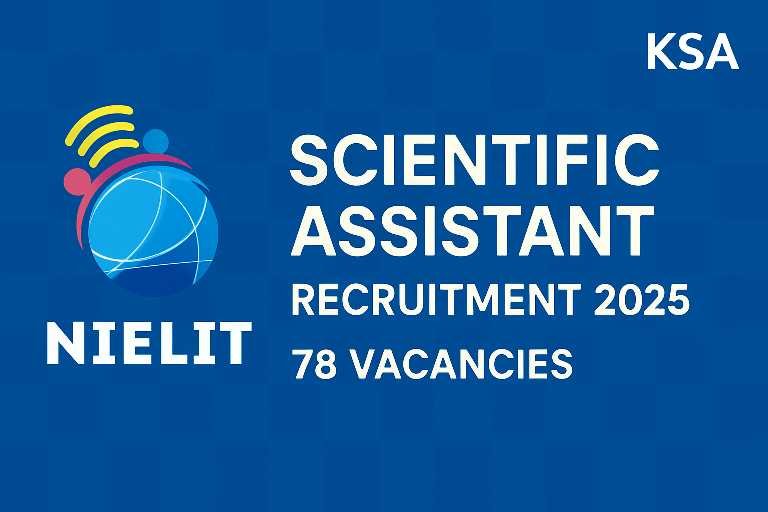
NIELIT Scientific Assistant Recruitment 2025 – Apply Online for 78 Vacancies, Eligibility, Fees, Selection Process

0

NIELIT Scientific Assistant Recruitment 2025 – Apply Online for 78 Vacancies, Eligibility, Fees, Selection Process

The National Institute of Electronics & Information Technology (NIELIT) has released a golden opportunity for engineering and technology aspirants through its Scientific Assistant Recruitment 2025. This recruitment is aimed at strengthening the Standardization, Testing, and Quality Certification (STQC) Directorate, which falls under the Ministry of Electronics and Information Technology (MeitY), Government of India.

A total of 78 Scientific Assistant posts are open for eligible candidates across India. If you have a background in Electronics, IT, Computer Science, Electrical Engineering, or a related field — this is a perfect opportunity to build a career in the government sector with a high-paying and respected role.

This detailed article brings you all key updates including eligibility, age limit, selection procedure, salary structure, important dates, exam pattern, and step-by-step guidance on how to apply online.


Overview: NIELIT Scientific Assistant Recruitment 2025

Key Point Details
Organization National Institute of Electronics & Information Technology (NIELIT)
Post Name Scientific Assistant
Job Location Across India
Total Vacancies 78
Application Mode Online
Salary Level Pay Matrix Level 6
Age Limit Maximum 30 years
Exam Mode OMR-Based Written Test
Last Date to Apply 18 March 2025

What is STQC? Why this role matters?

The Scientific Assistant role will be under the STQC Directorate, a national quality assurance infrastructure responsible for:

  • Testing and certification of software, hardware, and IT systems
  • Standardization and cyber security evaluations
  • Ensuring digital services meet global standards
  • Supporting government digital initiatives like Smart Governance, Digital India, and cybersecurity projects

This means selected candidates will have direct involvement in high-technology quality systems, government digital infrastructure, and standardization programs — making this job both impactful and future-centric.


NIELIT Scientific Assistant Vacancy 2025 – Detailed Vacancy Break-Up

A total of 78 vacancies are announced. Category-wise and location-wise vacancy details will be provided through the official notice and online portal during application.

This provides strong employment chances for fresh graduates as well as early-career professionals.


NIELIT Scientific Assistant Eligibility Criteria 2025

To apply online, candidates must meet the following educational qualification and age criteria:

Educational Qualification

Any one of the following degrees (or combination) is required:

  • B.E. / B.Tech in:
    • Electronics
    • Electronics & Communication
    • Electronics & Telecommunication
    • Computer Science
    • Information Technology
    • Electrical Engineering
    • Software Systems
    • Informatics
    • Computer & Networking Security

OR

  • M.Sc. / Post-Graduate in:
    • Electronics
    • Computer Science
    • Information Technology
    • Applied Electronics
    • Any relevant discipline mentioned in official notice

Age Limit

  • Maximum Age: 30 Years as on last date of application

Age Relaxation

Category Relaxation
SC / ST 5 Years
OBC (Non-Creamy Layer) 3 Years
PwBD 10 Years
Government employees Up to 5 Years

Candidates must have valid category certificates at the time of document verification.


NIELIT Scientific Assistant Salary 2025

The selected candidates will receive an attractive salary under:

  • Pay Level-6
  • ₹35,400/- to ₹1,12,400/- (as per 7th CPC)

Additional government benefits:

✔️ HRA
✔️ Dearness Allowance
✔️ Medical Facilities
✔️ Leave & Pension Benefits
✔️ Job Security & Growth Opportunities

Thus, this job offers a highly rewarding career in government tech-infrastructure.


Selection Process – NIELIT Scientific Assistant Recruitment 2025

Selection for the post is purely based on:

✅ OMR-Based Written Examination

There is no interview process, making the exam approach fully transparent and merit-based.

Candidates who score above the qualifying cutoff will be shortlisted for document verification.


NIELIT Scientific Assistant Exam Pattern 2025

Subject / Section Number of Questions Marks
Technical Subjects (Electronics/IT/CS etc.) 60 60
Generic Areas (GK, Reasoning, English, Quantitative Aptitude) 40 40
Total 100 Questions 100 Marks
  • Objective Type MCQs
  • Negative marking of 0.25 marks for each wrong answer
  • Exam duration will be 2 hours

Syllabus Overview

Technical Subjects Include

  • Digital Electronics
  • Microprocessors & Microcontrollers
  • Computer Networks & Cybersecurity Basics
  • Database Management
  • Operating Systems
  • Software Engineering & Quality Standards
  • IT Fundamentals, Cloud basics

Non-Technical Topics

  • General Intelligence & Reasoning
  • Quantitative Aptitude
  • General Awareness with current affairs focus
  • English Language & Comprehension

A detailed syllabus will be provided in the official PDF.


Application Fee

Category Fee
General / OBC ₹800/-
SC / ST / PwBD / Women Candidates No Fee

Payment mode: Online
(UPI / Debit Card / Credit Card / Net-Banking)

This fee exemption makes it a budget-friendly government recruitment for reserved categories.


Important Dates – Apply On Time!

Event Date
Start Date for Online Application 17 February 2025
Last Date for Online Application 18 March 2025 (5:30 PM)
Exam Date To Be Announced Soon

A large number of candidates will apply — so do not wait until the last day.


How to Apply for NIELIT Scientific Assistant Recruitment 2025

Follow the steps carefully:

  1. Visit the official NIELIT recruitment portal
  2. Click on Scientific Assistant Recruitment 2025 – Apply Online
  3. Register using your Email ID and Mobile number
  4. Fill out personal, academic and communication details
  5. Upload all documents in required format
  6. Pay the prescribed fee (if applicable)
  7. Review and submit the application form
  8. Download a copy and keep it for future reference

Required Documents for Upload

  • Passport-sized recent color photograph
  • Signature in specified size
  • Matriculation certificate (for age proof)
  • Educational qualification certificates & mark sheets
  • Caste certificate (if applicable)
  • PwBD certificate (if applicable)
  • Government ID for verification

Make sure all documents are clear and legible — blurry uploads may result in rejection.


Why You Should Apply – Key Benefits

✔ Government Job Permanency
✔ High Salary and Allowances
✔ Work in India’s Digital Infrastructure Projects
✔ Opportunity to develop future-tech skills
✔ Central Government career growth

For passionate candidates in Electronics, IT and Computer Science, this job is ideal for both technical exposure and stability.


Preparation Tips for Successful Selection

Here are expert-approved strategies:

⭐ Technical Section Tips

  • Revise core engineering subjects
  • Practice previous year papers of NIELIT/SSC-Scientific roles
  • Focus on basics of computers, cybersecurity, embedded systems

⭐ Non-Technical Section Tips

  • General knowledge and current affairs preparation
  • Regular mock tests for reasoning and aptitude

⭐ Overall Strategy

  • Make a 30-day revision plan
  • Do not guess too much due to negative marking
  • Time management is key during the exam

Final Verdict – A Career-Boosting Opportunity

The NIELIT Scientific Assistant Recruitment 2025 is a prestigious and career-defining opportunity for engineering and technology graduates looking for secure government employment.

With:

✔ 78 vacancies
✔ No interview
✔ High salary and perks
✔ National-level posting opportunities

It is recommended that all eligible aspirants must apply at the earliest and prepare well for the exam.

AFCAT 2026 Registration: Complete Guide to Apply Online, Eligibility, Exam Pattern & Preparation Tips

0

AFCAT 2026 Registration: Complete Guide to Apply Online, Eligibility, Exam Pattern & Preparation Tips


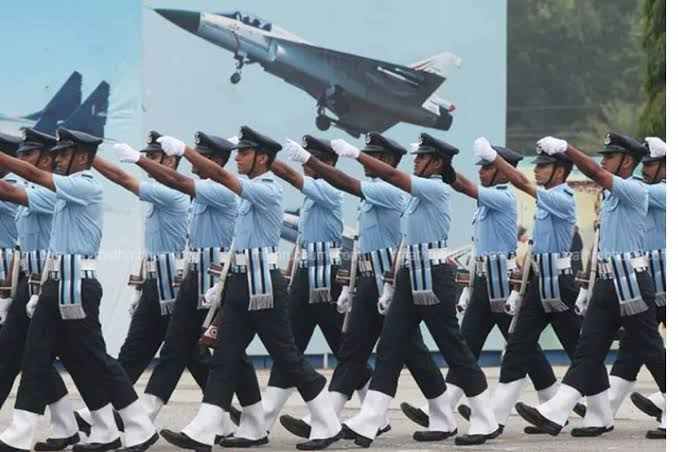
A career in the Indian Air Force is one of the most respected and thrilling professional choices for today’s youth. If you dream of defending the skies and serving the nation with honour, the AFCAT 2026 Registration is your first step. The recruitment for AFCAT 01/2026 has officially begun, and thousands of candidates across India can now apply for prestigious officer posts in Flying and Ground Duty Branches.

This detailed blog article will guide you through the AFCAT 2026 registration process, eligibility criteria, age limits, selection process, syllabus, exam pattern, preparation strategies, and everything else you need to know before applying. Stay with us and secure your chance to serve the nation proudly.


🔷 What is AFCAT?

AFCAT stands for Air Force Common Admission Test, a national-level competitive exam conducted twice a year by the Indian Air Force. It is the primary entry route for Group ‘A’ Gazetted Officers in:

  • Flying Branch
  • Ground Duty (Technical)
  • Ground Duty (Non-Technical)

Both men and women are eligible to apply depending on the branch.

It offers a stable, respected, and adventurous career with world-class training, excellent pay, and a chance to work with elite defence forces of India.


🔷 Why Apply for AFCAT 2026?

AFCAT 01/2026 provides lucrative opportunities for young aspirants:

✔ Prestigious job as a Commissioned Officer
✔ Excellent salary, allowances, and career growth
✔ Opportunities to fly fighter jets, transport aircraft & helicopters
✔ Leadership roles in defence services
✔ Chance to serve the nation with pride

Whether you want to be a pilot or an admin/technical officer, AFCAT 2026 Registration is your gateway to the Indian Air Force.


🔷 AFCAT 2026 Key Dates (Important Timeline)

Event Date
Online Registration Begins 17 November 2025
Last Date to Apply 14 December 2025
AFCAT 2026 Exam Date 31 January 2026

Candidates must apply early to avoid last-minute rush!


🔷 Total Vacancies

There are around 328+ officer vacancies distributed among different branches including Flying and Ground Duty.

👉 Seats are limited and competition is very high — proper preparation is key!


🔷 AFCAT 2026 Eligibility Criteria

Eligibility depends on the branch you apply for. Let’s break it down:

1️⃣ Age Limit

Branch Age
Flying Branch 20 to 24 years on 1 Jan 2027
CPL Holders (Flying) Up to 26 years
Ground Duty Technical 20 to 26 years
Ground Duty Non-Technical 20 to 26 years

2️⃣ Educational Qualifications

Flying Branch

  • Graduation (Min 50%) AND
  • Physics & Maths in 10+2 OR BE/B.Tech degree with min 60%

Ground Duty (Technical)

  • Engineering degree in relevant discipline with minimum 60% marks

Ground Duty (Non-Technical)

  • Graduation or Post-Graduation depending on specialization (like Admin, Accounts, Education, Logistics, Meteorology etc.)

3️⃣ Nationality and Marital Status

  • Indian citizens only
  • Generally unmarried candidates are eligible (exceptions may apply for technical entries)

📌 Tip: Double-check branch-wise eligibility before filling the form.


🔷 AFCAT 2026 Selection Process

The AFCAT selection process consists of the following phases:

1️⃣ AFCAT Written Exam
2️⃣ AFSB Interview (Intelligence, Group Tasks, Psychological Tests & Interview)
3️⃣ Medical Examination
4️⃣ Final Merit List

Only candidates who clear each stage are finally selected as officers.


🔷 AFCAT 2026 Exam Pattern

Section Questions Marks
General Awareness 25 75
Verbal Ability (English) 30 90
Numerical Ability 20 60
Reasoning & Military Aptitude 25 75
Total 100 300
  • Duration: 2 Hours
  • Question Type: Objective Multiple Choice
  • Negative Marking: Yes (1 mark deducted for every wrong answer)

🔷 AFCAT 2026 Syllabus (Section-Wise Details)

📌 English

  • Grammar
  • Antonyms/Synonyms
  • Comprehension
  • Vocabulary
  • Sentence Formation
  • Error Detection

📌 General Awareness

  • History, Geography, Polity, Economy
  • Science & Technology
  • Sports & Defence News
  • Current Affairs

📌 Numerical Ability

  • Time & Work
  • Time, Speed & Distance
  • Simple & Compound Interest
  • Profit & Loss
  • Ratio & Proportion
  • Average, Percentage

📌 Reasoning & Military Aptitude

  • Analogy
  • Odd One Out
  • Coding-Decoding
  • Pattern Recognition
  • Spatial & Military Aptitude

🔷 Physical and Medical Standards

To become an IAF officer, candidates must be:

✔ Physically Fit
✔ Mentally Strong
✔ Medically sound (Eyesight, Hearing, BMI standards etc.)

Flying candidates must also qualify CPSS (Computerised Pilot Selection System).


🔷 How to Apply for AFCAT 2026 Registration?

Follow these steps carefully:

1️⃣ Visit the official AFCAT application portal
2️⃣ New users must register using email & mobile number
3️⃣ Login and fill full application form
4️⃣ Upload photo, signature, and documents in required format
5️⃣ Select branch preferences & exam city
6️⃣ Pay the application fee
7️⃣ Review all details and submit
8️⃣ Download and print the confirmation page

🎯 Tip: Ensure your name, DOB and marks match exactly with certificates!


🔷 AFCAT 2026 Application Fee

  • ₹550 + GST
  • Online payment methods only

No offline mode is accepted.


🔷 Salary Structure After Selection

Rank Approx. Monthly Salary
Flying Officer ₹56,100 – ₹1,77,500 + Flying Allowances

Additional perks:

  • Uniform & Travel allowance
  • Free Medical facilities
  • Subsidized accommodation
  • Insurance cover up to ₹75 Lakhs
  • CSD benefits
  • Once-in-a-lifetime opportunities!

🔷 AFCAT 2026 Preparation Tips

Here is a smart study approach to crack AFCAT in one attempt:

📌 1. Create a Realistic Study Plan

Divide topics & follow a timetable

📌 2. Practice Daily Mock Tests

Boost accuracy + speed

📌 3. Read Newspapers & Defence News

Score well in General Awareness

📌 4. Strengthen English Vocabulary

Learn 10-20 new words daily

📌 5. Focus on Weak Areas

Analyse mistakes after each mock test

📌 6. Develop Officer-like Personality

Communication, confidence, leadership — essential for AFSB


🔷 AFCAT 2026 Training

Selected candidates undergo rigorous military training at:

📍 Air Force Academy, Dundigal (Hyderabad)

Training duration depends on branch & specialization — generally 1 year.


🔷 Common Mistakes to Avoid in AFCAT 2026 Registration

  • Incorrect personal details
  • Last-minute application submission
  • Uploading wrong size images
  • Choosing exam city without planning travel
  • Ignoring branch-wise eligibility criteria

❌ Any mistake may lead to form rejection.


🔷 AFCAT 2026 Registration — FAQs

Q. Can girls apply for AFCAT 2026?
✔ Yes, women are eligible for Flying & Ground Duty branches.

Q. What is the marking scheme?
+3 for correct answer, –1 for wrong answer.

Q. Can I apply for multiple branches?
Yes, depending on your qualifications and eligibility.

Q. Is coaching necessary?
Not mandatory. Self-study with mock tests is enough for many candidates.


🎯 Final Takeaway

The AFCAT 2026 Registration is now open and offers you a golden opportunity to join the prestigious Indian Air Force as a Commissioned Officer. If your heart beats for the nation and you dream to fly high or take up strategic defence roles — this is your moment.

✔ Apply early
✔ Prepare smartly
✔ Believe in yourself

✈️ Your journey to the uniform begins today — Make it count!