Monday, July 6, 2026
Advertisementspot_img
Home Blog Page 119

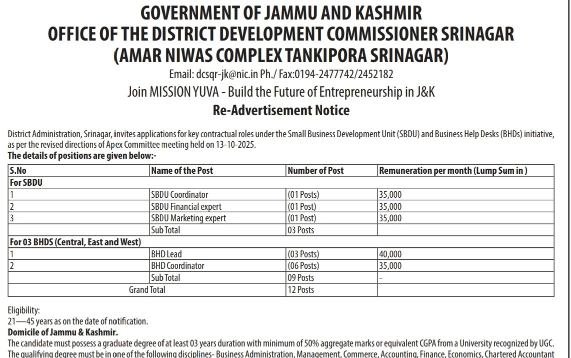
District Development Commissioner Srinagar Re-Advertisement 2025: Apply for SBDU & BHD Posts Under Mission YUVA

0

District Development Commissioner Srinagar Re-Advertisement 2025: Apply for SBDU & BHD Posts Under Mission YUVA

The Office of the District Development Commissioner Srinagar has issued a re-advertisement notice inviting applications for several key contractual positions under the Small Business Development Unit (SBDU) and Business Help Desks (BHDs) as part of MISSION YUVA – Build the Future of Entrepreneurship in J&K. Candidates from Jammu & Kashmir with the required qualifications and passion for entrepreneurship development are encouraged to apply.

This recruitment drive aims to strengthen support systems for small businesses and startups across Srinagar by deploying experts in business development, finance, marketing, and coordination roles.


Mission YUVA Recruitment 2025 – Highlights

Particular Details
Recruiting Authority District Development Commissioner Srinagar
Initiative Mission YUVA
Mode of Engagement Contractual
Total Vacancies 12 Posts
Work Location Srinagar, J&K
Application Mode Online
Age Limit 21–45 years
Domicile Requirement Jammu & Kashmir

Vacancy Details

The posts fall under two key initiatives – SBDU and Business Help Desks (Central, East & West Zones). Below is the vacancy breakup:

Posts Under SBDU

S. No Post Name No. of Posts Monthly Remuneration
1 SBDU Coordinator 01 ₹35,000
2 SBDU Financial Expert 01 ₹35,000
3 SBDU Marketing Expert 01 ₹35,000

Total SBDU Posts: 03


Posts Under Business Help Desks (BHDs)

S. No Post Name No. of Posts Monthly Remuneration
1 BHD Lead 03 ₹40,000
2 BHD Coordinator 06 ₹35,000

Total BHD Posts: 09


Grand Total Vacancies: 12

These roles are designed to directly support entrepreneurs, startups, and small businesses by providing guidance, training, financial literacy support, and market linkages.


Eligibility Criteria

Age Limit

✔ Minimum: 21 years
✔ Maximum: 45 years
(as on the application notification date)


Domicile Requirement

Applicants must be residents of Jammu & Kashmir.


Educational Qualification

Candidates must hold a graduate degree of at least 3 years duration with minimum 50% marks or equivalent CGPA from a UGC-recognized University.

Accepted degree disciplines include:

  • Business Administration
  • Management
  • Commerce
  • Accounting
  • Finance
  • Economics

Additionally, candidates with professional qualifications such as:

  • CA (from ICAI)
  • CMA / ICWA (from ICMAI)

are also eligible.


Key Responsibilities (Indicative)

SBDU Coordinator

  • Oversee business development initiatives
  • Coordinate with stakeholders
  • Support entrepreneurship programs

Financial Expert

  • Provide financial planning assistance
  • Support MSMEs and startups
  • Educate beneficiaries on funding and compliance

Marketing Expert

  • Assist businesses with branding & promotion strategies
  • Market research & outreach
  • Support growth planning

BHD Leads & Coordinators

  • Act as first-level contact points for entrepreneurs
  • Provide guidance & support services
  • Facilitate government scheme access
  • Strengthen entrepreneurship ecosystem

Selection Process

As per the notice, the detailed guidelines regarding selection criteria, evaluation process, and role descriptions are available online. Candidates are advised to carefully review the guidelines before applying.

(Refer to the official guidelines link shared in the notification.)


How to Apply

Eligible candidates can submit their applications online using the official Google Form link provided in the advertisement.

Application Steps

  1. Visit the official application link
  2. Fill in all required details accurately
  3. Upload the necessary documents
  4. Submit the form before the deadline

📌 Important Note:
This is a public service advertisement, meaning NO application fee is required.


Application Deadline

Candidates must apply within 15 days from the date of publication of the advertisement. Ensure you submit your application on time to avoid rejection.


Why Join Mission YUVA?

Mission YUVA is a visionary initiative aimed at:

✔ Empowering youth
✔ Building entrepreneurship culture
✔ Supporting small businesses
✔ Creating livelihood opportunities
✔ Boosting economic development in J&K

By joining this program, selected candidates will play a vital role in transforming the entrepreneurial landscape of Srinagar.


Important Points to Remember

  • Contractual engagement only
  • Posts are subject to evaluation & approval
  • Incomplete applications may be rejected
  • Only J&K domiciles are eligible
  • Professional discipline is preferred

Contact & Office Details

Office of the District Development Commissioner Srinagar
Amar Niwas Complex
Tankipora, Srinagar

Email & fax details are mentioned in the official notice.


Final Words

The Mission YUVA Recruitment 2025 under the District Administration Srinagar offers an excellent opportunity for skilled professionals in finance, management, and business development to contribute meaningfully to society. With attractive monthly remuneration and the chance to work closely with entrepreneurs and startups, this initiative is ideal for motivated individuals looking to make an impact.

Interested candidates meeting the eligibility criteria should apply at the earliest and carefully follow the official instructions.

Stay tuned to official government notifications for further updates and announcements.

UGC NET December 2025 Admit Card: Direct Link, Release Date, and How to Download

0

UGC NET Admit Card 2025: Release Date, Download Link & Complete Guide

The UGC NET December 2025 admit card is one of the most anticipated events for aspirants appearing in the University Grants Commission National Eligibility Test (UGC NET). Conducted by the National Testing Agency (NTA), this examination is crucial for candidates seeking Junior Research Fellowship (JRF) and Assistant Professorship eligibility in universities and colleges across India.

With the exam scheduled to begin soon, candidates are eagerly waiting to download their hall ticket and confirm their exam centre, date and shift details. Here’s a comprehensive guide on everything you need to know — from release dates to how to download the admit card.


UGC NET December 2025 Admit Card — Key Highlights

  • Exam Name: University Grants Commission National Eligibility Test (UGC NET)
  • Conducting Body: National Testing Agency (NTA)
  • Session: December 2025
  • Exam Dates: 31 December 2025 to 7 January 2026 across multiple shifts and days
  • Admit Card Status: Yet to be released (expected soon)
  • Official Website: ugcnet.nta.ac.in

Expected Admit Card Release Date

The official UGC NET admit cards for December 2025 session have not been published as of now. However, based on previous exam cycles and expert predictions, the hall ticket is likely to be released three to five days before the first exam date — which means the admit card may be issued between 26 December and 28 December 2025.

It’s important for candidates to regularly monitor the official NTA UGC NET website for the confirmed release announcement and the live link to download the hall ticket.


What Is a UGC NET Admit Card?

The UGC NET admit card (hall ticket) is an essential document that allows candidates to sit for the examination. It contains key information such as:

  • Candidate’s Name
  • Application Number / Roll Number
  • Exam Date & Time
  • Exam Centre Address
  • Shift and Reporting Time
  • Important Instructions for Exam Day

Without a valid admit card, candidates will not be allowed entry into the examination hall. Therefore, it is crucial to download and print your hall ticket well before your exam date.


How to Download UGC NET Admit Card 2025

Once the admit card is released, candidates must follow the steps below to download it from the official portal:

Step-by-Step Guide:

  1. Visit the official UGC NET website:
    Go to https://ugcnet.nta.ac.in — the official portal for the UGC NET exam.
  2. Look for the admit card link:
    On the homepage, find and click the link labelled “UGC NET December 2025 Admit Card” once it becomes active.
  3. Enter login credentials:
    Enter your Application Number, Date of Birth (DOB) or Password exactly as provided during registration.
  4. Click Submit:
    After submitting your details, your admit card will appear on the screen.
  5. Download and Print:
    Download the hall ticket and take multiple print-outs to carry to the examination centre.

Tip: Keep both soft and hard copies of the admit card in a secure place. Check all the details carefully and ensure there are no errors.*


City Intimation Slip — What It Means

Before the admit card release, NTA has already published the City Intimation Slip for UGC NET December 2025. This slip helps candidates know the exam city allotted to them and plan travel and accommodation in advance. However, it is not the official hall ticket.

The UGC NET admit card with exact centre details and exam time slots will be made available a few days prior to the exam.


UGC NET Exam Schedule — December 2025

The UGC NET December 2025 examination will take place from 31 December 2025 to 7 January 2026 across several days and slots. The detailed schedule is subject-wise and will appear on the official website along with the admit card link.

Typically, the UGC NET is conducted in two shifts per day:

  • Morning Shift: 9:00 AM to 12:00 PM
  • Afternoon Shift: 2:00 PM to 5:00 PM (approx.), depending on subjects and logistics.

It is essential to note your exact reporting time and shift on the admit card once released.


Important Instructions for Exam Day

To avoid any issues during the exam, candidates must follow these instructions on the day of the test:

📌 Before Leaving for Exam Centre:

  • Carry your UGC NET admit card and a valid photo ID proof such as:
    • Aadhaar Card
    • Passport
    • Voter ID
    • Driving License
  • Keep a passport-size photograph (same as submitted in application form) for any verification requirement.
  • Reach the centre at least 1 hour before the reporting time specified on your admit card.

🚫 Items NOT Allowed in Exam Hall:

Electronic devices like mobile phones, Bluetooth devices, calculators, watches with electronic features, and any unauthorized printed material are strictly prohibited.

Failure to comply with the instructions may result in disqualification or denial of entry.


What to Do If Admit Card Details Are Incorrect

In rare cases, candidates might find discrepancies in:

  • Name spelling
  • Date of birth
  • Exam date / centre details
  • Photograph or signature

If any such error is noticed, immediately contact the NTA helpdesk or send an email to the support team provided on the official portal. Early reporting ensures corrections can be made before the exam date.


Final Thoughts & Preparation Tips

Downloading your UGC NET admit card December 2025 is a crucial step toward a successful exam day. Make sure you:

  • Download and print your admit card early
  • Verify all the details carefully
  • Prepare a checklist of documents required on exam day
  • Stay updated with official announcements on the NTA portal

Remember that UGC NET qualification opens doors to academic and research careers across India — whether it’s securing a JRF or qualifying for Lectureship positions.

Stay tuned to the official website and trusted news updates for the exact release of the admit card link.


FAQs (Frequently Asked Questions)

Q1. When will the UGC NET Admit Card 2025 be released?
A1. It is expected to be released around late December 2025, typically 3–5 days before the first exam date.

Q2. Where can I download the admit card?
A2. From the official NTA UGC NET website: ugcnet.nta.ac.in.

Q3. Can I enter the exam centre without the admit card?
A3. No — the admit card is mandatory for entry.

Q4. What should I carry along with the admit card?
A4. A valid photo ID proof and a passport-size photograph.

JEE Main 2026: Mandatory Photo Verification Certificate Submission — Complete Guide for Aspirants

0

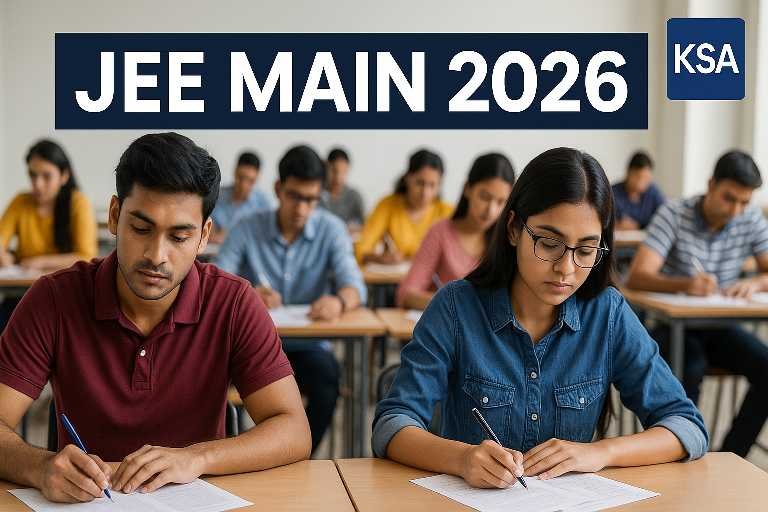
JEE Main 2026: Mandatory Photo Verification Certificate Submission — Complete Guide for Aspirants

The Joint Entrance Examination (JEE) Main 2026, conducted by the National Testing Agency (NTA), has introduced a crucial new requirement for certain candidates ahead of the Session-1 exam in January. Candidates who registered using identity proofs other than Aadhaar or DigiLocker must now submit a Photo Verification Certificate by January 7, 2026 to complete their application process and appear in the examination. This requirement forms part of the NTA’s enhanced identity verification strategy to ensure the authenticity of candidates and curb impersonation.

In this detailed article, we explain who needs to submit this certificate, how to prepare it, step-by-step upload instructions, important deadlines, what happens at the exam centre, and how this fits into broader changes to JEE identification protocols.


Why Is the Photo Verification Certificate Required?

To improve the integrity of national exams like JEE Main, the NTA continues to strengthen identity checks. For JEE Main 2026, candidates who used alternate identity proofs such as PAN Card, Indian Passport, or Non-Indian Passport during registration are now required to upload a Photo Verification Certificate (PVC). This document confirms that the photo and identity provided in the application belong to the actual candidate who will appear for the test.

This additional requirement complements the face and biometric verification systems that the NTA is rolling out from 2026, where live photo capture and facial recognition checks may be used to verify candidates at multiple stages of the exam process.


Who Must Submit the Photo Verification Certificate?

Not all JEE Main 2026 aspirants are required to submit the PVC. This directive applies specifically to candidates who:

  • Registered without using Aadhaar Card or DigiLocker for identity proof; and
  • Used alternate IDs such as PAN Card, Indian Passport, or Non-Indian Passport in their JEE Main 2026 application.

Candidates who submitted Aadhaar or DigiLocker details during registration typically do not need to provide this certificate unless explicitly contacted by the NTA.


Important Deadline

📅 Photo Verification Certificate Upload Deadline: January 7, 2026
All eligible candidates must complete the upload by this date to ensure their candidature is valid for the JEE Main Session-1 exam scheduled in January.

This deadline is final, and missing it can put your ability to sit for the exam at risk, so early preparation is highly recommended.


How to Download & Prepare the Photo Verification Certificate

Step 1: Log in to Your JEE Main Account

Go to the official JEE Main portal: jeemain.nta.nic.in and log in using your application number and password.

Step 2: Download the Verification Form

Once logged in, locate the Photo Verification Certificate link under the dashboard. Download the certificate in the prescribed format.

Step 3: Fill Out the Certificate

Complete all required fields accurately:

  • Full name of candidate
  • Application details
  • Date and signature fields

Step 4: Attach Recent Passport-Size Photograph

Affix a recent passport-size colour photograph with a clear view of the face. It should be professionally taken or meet standard photo guidelines. The principal’s/Headmaster’s signature must overlap both the photo and the certificate to validate it.

Step 5: Attestation

Get the certificate signed and stamped by your School/College Principal or Headmaster. This attestation is mandatory and validates the candidate’s identity.

Step 6: Scan & Save as PDF

Scan the completed and attested certificate in PDF format ensuring the file is clear and readable. Make sure the signature and photo are visible.


Uploading the Photo Verification Certificate

After preparing the document:

  1. Go back to the official JEE Main login page.
  2. Navigate to the section for PVC upload.
  3. Upload the scanned PDF of the certificate.
  4. Verify that the upload is successful and submit.

Make note of any confirmation message or reference number on the screen after upload — this can be useful for future reference.


Things to Keep in Mind Before Submission

✔️ Ensure the principal’s signature overlaps the photo — this prevents invalidation at verification.
✔️ Confirm that your photo meets JEE Main guidelines (recent, clear, proper background).
✔️ Check that the file is in PDF format and the size is readable.
✔️ Save a copy of the uploaded PDF and any confirmation receipts for your records.


What Happens on Exam Day?

Candidates who have submitted the PVC will be required to carry the printed and attested certificate with their JEE Main admit card to the examination centre. Invigilators may cross-verify the document along with the candidate’s live photograph capture (if applicable) before allowing entry.

Failure to present the certificate at the exam venue can lead to denial of entry or candidature cancellation, so it’s crucial to bring it along.


Background: NTA’s Identity Verification Enhancements

The NTA has been working to enhance the integrity and credibility of its examination processes. One of the major updates for 2026 is the planned introduction of live photo capture and facial biometric verification for exams like NEET-UG and JEE Main. This system is designed to confirm the candidate’s identity in real-time and prevent impersonation.

Under this framework:

  • Candidates may be required to upload a live photo during registration.
  • Facial recognition technology could be used at exam centres to match the candidate with the photo on record.

These measures align with the NTA’s broader goal of ensuring fairness and transparency in national entrance examinations.


How This Impacts JEE Main Aspirants

If you are appearing for JEE Main 2026, here’s what you should do now:

🚀 Check if you need to upload the Photo Verification Certificate
🚀 Download and prepare the certificate early
🚀 Get it signed and attested ahead of time
🚀 Upload before the January 7 deadline
🚀 Carry all original documents and the PVC to the exam centre


Conclusion

The Photo Verification Certificate requirement for JEE Main 2026 is a critical compliance step for candidates who used non-Aadhaar identity proofs. Timely submission by January 7, 2026 is essential to ensure your candidature remains valid for the exam. By carefully following the steps outlined — from downloading the certificate, attaching a recent photo, getting proper attestation, and uploading it — you can complete this requirement smoothly.

Staying updated with official notifications from NTA and following photo/document guidelines will help you avoid last-minute issues. Best of luck with your JEE Main 2026 preparation and exam!

IUST Combined Result/Score-Sheet 2025 Released for Various Posts — Download PDF

0

IUST Combined Result/Score-Sheet 2025 Released for Various Posts — Download PDF

The Islamic University of Science & Technology (IUST), Awantipora has officially released the Combined Result / Score-Sheet for several non-teaching positions advertised in 2024. This notification concerns candidates who appeared in the Paper-A and Paper-B written examinations held on 20 and 21 September 2025 for the posts of:

  • Assistant Registrar
  • Assistant Finance Officer
  • Training & Placement Officer
  • Manager / Assistant Manager (CIED)

The University has now published the final combined score-sheet based on performance in both papers. Candidates can download the complete PDF result through the official link below:

👉 Download IUST Combined Result PDF

https://www.iust.ac.in/Notifications/Jobs/251224163614.pdf


📢 Overview of the Notification

According to the notice issued under No. IUST/Reg/Adm/E/25/475 dated 24-12-2025, the University clarified that:

  • Paper-B was evaluated only for those candidates who qualified Paper-A.
  • The combined result includes Paper-A (30 marks) and Paper-B (70 marks).
  • Candidates securing qualifying marks have been declared “Qualified” in the result sheet.

The notification has been issued by the Registrar, IUST from the University’s main campus at One University Avenue, Awantipora, Pulwama, J&K.


📝 Posts Covered in the IUST Combined Result 2025

The released PDF contains separate score-sheets for each of the following posts:

✔ Assistant Registrar

This section lists candidate roll numbers, Paper-A marks, Paper-B marks, total marks (out of 100), and result status. Many candidates have scored above 70 marks, reflecting strong competition for the administrative post.

✔ Assistant Finance Officer

The score-sheet also shows excellent performance trends, with several candidates crossing 80+ marks out of 100.

✔ Training & Placement Officer

Candidates applying for TPO posts will find a dedicated table showing detailed marks break-up.

✔ Manager / Assistant Manager (CIED)

This category relates to the Centre for Innovation and Entrepreneurship Development (CIED), with scores indicating high-level managerial competency.

Each section clearly mentions Qualified / Not Qualified status based on Paper-B performance and total marks.


📊 Marking Scheme Explained

The combined score-sheet follows this structure:

  • Paper-A: 30 Marks
  • Paper-B: 70 Marks
  • Total: 100 Marks

🔹 Important Rule:
Candidates must secure at least 50% marks in Paper-B to be considered qualified — even if their total score exceeds the cutoff. Cases failing this condition are explicitly marked as:

“Not Qualified, less than 50% marks secured in Paper-B”

This ensures merit-based evaluation and transparency in the selection process.


📍 Examination Details

  • Exam Dates: 20–21 September 2025
  • Advertisement Notices:
    • No. 01 of 2024 (dated 06-02-2024)
    • No. 02 of 2024 (dated 12-02-2024)

Earlier, the University had already released the Paper-A results on 18-12-2025, and now the combined score-sheet gives the final written test performance status.


🔎 How to Check the IUST Combined Result PDF

Follow these steps to access your result:

  1. Visit the official IUST website — www.iust.ac.in
  2. Go to the Notifications / Jobs section
  3. Click on the Combined Result/Score-Sheet link
  4. Download the PDF
  5. Search your Roll Number in the list
  6. Check marks in:
    • Paper-A
    • Paper-B
    • Total (100 marks)
  7. Confirm result status (Qualified / Not Qualified)

Or use the direct PDF link provided above for quicker access.


🏫 About IUST Kashmir

The Islamic University of Science & Technology (IUST) is a premier institution located in Awantipora, Pulwama, Jammu & Kashmir. Known for its academic excellence, modern infrastructure, and commitment to professional education, the University regularly publishes transparent recruitment notifications and results to maintain fairness in appointments.


📌 What Happens Next?

Candidates who are marked “Qualified” in the combined written examination are expected to be shortlisted for the next stage of the selection process, which may include:

  • Interview
  • Document Verification
  • Final Merit Preparation

The University may soon release a separate notice regarding the schedule of interviews or further selection procedures. Candidates are advised to regularly check the official IUST website for updates.


🛑 Important Notes for Candidates

✔ Only candidates who qualified Paper-A were evaluated in Paper-B
✔ Paper-B minimum qualifying mark condition applies
✔ All details are available only in the official PDF
✔ Any future clarification must be sought from the University authorities


📞 Contact Details (as per notification)

Islamic University of Science & Technology (IUST)
One University Avenue,
Awantipora, Pulwama, J&K – 192122
📮 Post Box: 89 GPO Srinagar
☎ Contact: 01933-247954 / 955
🌐 Website: www.iust.ac.in


⭐ Final Words

The release of the IUST Combined Result / Score-Sheet 2025 marks a crucial milestone for aspirants seeking administrative and professional roles in the University. The transparent and structured assessment process ensures that candidates are evaluated fairly based on academic knowledge and professional competency.

Candidates are encouraged to download the result PDF, verify their scores, and stay tuned for the next round of updates from the University.

🔗 Download Result PDF Again

https://www.iust.ac.in/Notifications/Jobs/251224163614.pdf


🏷 Suggested SEO Tags

IUST Recruitment 2025, IUST Combined Result, IUST Assistant Registrar Result, IUST Assistant Finance Officer Result, Training & Placement Officer Result IUST, Manager CIED IUST Result, IUST Awantipora Jobs, Jammu and Kashmir University Recruitment, IUST Score Sheet 2025, IUST Written Exam Result

If you’d like, I can also create a short summary version or add FAQs for better SEO performance 👍

DSEK Allows Remedial Classes During Winter Vacation in Kashmir Division — Key Guidelines Issued

0

DSEK Allows Remedial Classes During Winter Vacation in Kashmir Division — Key Guidelines Issued

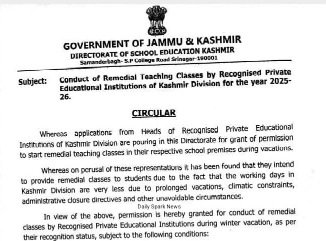
The Directorate of School Education Kashmir (DSEK), Government of Jammu & Kashmir, has issued an important circular permitting recognised private educational institutions across the Kashmir Division to conduct remedial and supplementary teaching classes during the winter vacation for the academic year 2025–26. The circular, dated 20 December 2025, comes in response to numerous requests from school heads seeking approval to support students academically despite prolonged winter closures.

Why the permission was granted

According to the circular, school heads highlighted that academic working days in the Kashmir Division remain limited due to factors such as:

  • Long winter vacations
  • Climatic challenges
  • Administrative closures
  • Other unavoidable circumstances

Given these constraints, schools proposed conducting remedial classes to help students bridge learning gaps and ensure continuity of academic engagement. After reviewing the submissions, the Directorate agreed to allow classes under strictly regulated conditions.


Key Conditions for Conducting Winter Remedial Classes

The circular emphasizes that permission is conditional, ensuring the safety, comfort, and voluntary participation of students.

Here are the four core guidelines schools must follow:

1. Parental consent & voluntary participation

Remedial or supplementary teaching may only be conducted with prior consent from parents. Participation must remain purely voluntary, ensuring that no student is compelled to attend.

2. No extra fee allowed

Schools have been explicitly barred from charging any additional fees for remedial classes. This step ensures equal access for all students, regardless of financial background.

3. Proper heating facilities required

Given the harsh winter conditions in Kashmir, schools must ensure adequate heating arrangements inside classrooms to safeguard student health and comfort.

4. Fixed class timings

Remedial sessions are allowed only between
11:00 AM to 3:00 PM

This time window ensures classes are conducted during the warmer hours of the day.


Applies Only to Recognised Private Educational Institutions

The directive applies exclusively to recognised private schools in the Kashmir Division and must be carried out strictly in line with each institution’s recognition status.

The order was issued by the Joint Director (EE), Directorate of School Education Kashmir, and circulated to:

  • Secretary, School Education Department
  • Divisional Commissioner, Kashmir
  • All Deputy Commissioners
  • Chief Education Officers
  • PA to Director School Education Kashmir

What This Means for Students and Parents

🌟 Academic Support Despite Winter Break

Students struggling in key subjects will have an opportunity to revise concepts, clear doubts, and stay academically active during winter months.

🤝 Full Parental Control

Parents retain the final say over whether their child attends remedial sessions.

💸 No Financial Burden

The “no extra fee” clause ensures remedial support remains accessible and inclusive.

🧣 Safety Measures Required

Mandatory heating arrangements prioritize student well-being.


Why Remedial Classes Matter

Remedial classes play a critical role in:

  • Strengthening foundational learning
  • Supporting slow learners
  • Preparing students for upcoming exams
  • Reducing academic stress
  • Improving overall performance

In regions like Kashmir where the school year is often disrupted by weather and closures, such measures can significantly benefit students.


Winter Education Policy — A Balanced Approach

The Directorate’s move strikes a balance between:

✔ Ensuring learning continuity
✔ Respecting winter realities
✔ Protecting student welfare
✔ Preventing commercial exploitation

By setting clear conditions, the administration ensures that remedial teaching remains student-centric and welfare-oriented.


Expected Impact on Academic Calendar

Education experts believe that allowing voluntary classes during winter may:

  • Reduce syllabus backlog
  • Improve exam readiness
  • Benefit board-class students in particular
  • Promote structured learning instead of private tuitions

However, adherence to safety, health, and fairness guidelines remains essential.


Final Words

The Directorate of School Education Kashmir’s decision to allow remedial classes during winter vacation is a positive step aimed at supporting students academically while ensuring their safety and rights. With clear instructions on parental consent, no-fee policy, heating arrangements, and regulated timings, the circular ensures that learning support continues in a responsible and student-friendly manner.

Parents, students, and school authorities across the Kashmir Division are expected to cooperate to ensure proper implementation of these guidelines.

Stay connected with us for more updates on education news from Jammu & Kashmir. If you have questions or experiences to share about winter remedial classes, feel free to join the discussion in the comments section below!

Reservation: Ruhullah Warns of Joining Students’ Protest if Govt Fails to Engage

0

Reservation: Ruhullah Warns of Joining Students’ Protest if Govt Fails to Engage

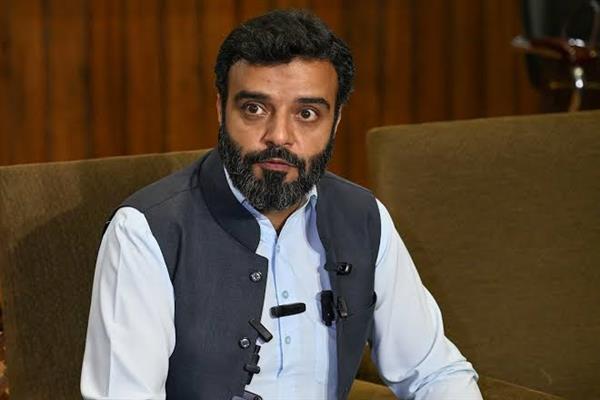
Srinagar, Dec 25: National Conference leader and Member of Parliament Aga Syed Ruhullah Mehdi on Thursday said he has neither forgotten nor abandoned the students agitating over their unresolved issues, and urged the government to immediately engage with them.

Ruhullah said the government must initiate dialogue with the students and clearly apprise them of the measures and decisions taken to resolve the matter. He said students deserve transparency and timely communication, rather than silence and delay.

“I have neither forgotten nor left the students alone. I once again urge the government to talk to the students and apprise them of the measures and decisions taken to resolve this issue,” he said.

Issuing a clear warning, Ruhullah said if the government fails to act by Saturday, he will stand shoulder to shoulder with the youth. He announced that he will walk with the students and sit with them on Sunday at the same place where a similar protest was held last year on December 23 to ensure their voices are heard.

“If that does not happen till Saturday, I will not leave our youth and students helpless. I will walk with them and sit with them this coming Sunday to make them heard,” he said.

Ruhullah said the concerns raised by students are genuine and require serious attention, adding that ignoring young voices only deepens alienation and mistrust. [KNT]

8th Pay Commission in India (2025–26): Complete Guide on Eligibility, Timeline, Salary Hike & Pension Revision

0

8th Pay Commission in India (2025–26): Complete Guide on Eligibility, Timeline, Salary Hike & Pension Revision

The Indian Government has taken a major step forward in revising pay and pensions for central government employees by formally constituting the 8th Central Pay Commission (8th CPC). After years of anticipation, this latest pay commission aims to overhaul salary structures, allowances, and retirement benefits in line with current economic realities. This comprehensive guide explains who benefits, how much salary could rise, when changes may take effect, and why this matters for millions of government employees and pensioners.


What Is the 8th Pay Commission?

The Pay Commission is a statutory body appointed by the Government of India, traditionally every ten years, to review and suggest revisions to pay scales, allowances, pension and related financial benefits for Central Government employees and pensioners. The 8th Pay Commission succeeds the 7th CPC, whose recommendations remain in effect through December 31, 2025.

The primary objective of the 8th CPC is to ensure government compensation remains fair, competitive, and aligned with rising living costs and modern job expectations. It will also examine retirement benefits, including pensions and family pensions.


Who Is Eligible for the 8th Pay Commission?

The 8th Pay Commission covers several key categories within the government workforce:

  • Central Government employees in established civil services roles.
  • Central pensioners and family pensioners drawing retirement benefits linked to central pay structures.
  • Personnel under structured pay matrices defined by the previous pay commission.

It’s important to note that state government employees are not automatically included in the 8th CPC’s recommendations; state governments must decide independently whether to adopt the central panel’s proposals. Similarly, employees of public sector units (PSUs), autonomous bodies, and statutory organizations benefit only if their respective governing bodies choose to implement the revisions.


Official Timeline & When Salaries May Rise

The Government of India has issued the official notification and approved the Terms of Reference (ToR) for the 8th Pay Commission, giving the panel approximately 18 months to complete its work.

Here’s what is expected:

  • 📅 Effective Date (on paper): January 1, 2026 — the date from which revised pay and pension structures are likely to be applicable retrospectively.
  • 🕒 Recommendation Submission: By mid-2027 or within the 18-month period post-constitution.
  • 💰 Actual Salary & Pension Crediting: Although the new scales may be effective from January 1, 2026, salaries and arrears usually take several months to be processed and credited into employee bank accounts, often stretching into the 2026–27 financial year.

This phased rollout — effective date first, followed by Cabinet approval, then disbursal — is consistent with past pay commissions. It ensures budget planning and administrative preparation but also means employees may wait for the full financial impact.


Expected Salary Hikes & Fitment Factor

While official figures are yet to be announced, preliminary projections and expert estimates suggest substantial increases in pay and pension once the 8th CPC recommendations are implemented.

Key expectations include:

  • 🔺 Significant salary increases in the range of 20% to 35% for many government employees, compared to 7th CPC levels.
  • 📈 Fitment Factor: A crucial number that determines basic salary increase. Earlier pay panels used fitment factors such as 2.57 under the 7th CPC. Under the 8th CPC, estimates vary, and a fitment factor between 2.15 and above could significantly boost basic pay across salary levels — though the final figure will depend on inflation, fiscal conditions, and other economic variables.

A higher fitment factor benefits employees by raising the basic pay, which then proportionately increases allowances such as House Rent Allowance (HRA) and transport allowances, which are calculated as a percentage of basic salary.


Dearness Allowance (DA) & Allowances Revision

Dearness Allowance (DA) is designed to protect employees’ purchasing power against inflation. Under the 7th CPC, DA had risen progressively with inflation adjustments. Under the 8th Pay Commission framework:

  • DA is anticipated to be reset once the new pay structure is implemented (likely starting at zero and recalculated thereafter).
  • Other allowances such as HRA, medical allowances, and travel allowances are also expected to be recalibrated based on updated basic pay levels.

Resetting DA ensures fairness across pay levels but also means that initial take-home salary increases may be moderated, as DA is integrated into the new structure before future DA adjustments resume.


What This Means for Pensioners

Pensioners stand to benefit along with serving employees, as pensions are linked to the basic pay and allowances set by the pay commission. The 8th CPC is expected to revise minimum pension levels upwards and review family pension norms — potentially offering enhanced financial security for retirees and their families.

However, the full effect on pension amounts will depend on the final fitment factor and how allowances like DA are restructured under the new system.


Impacts on Employees & Economy

The 8th CPC’s recommendations are not just about pay — they affect spending power, retirement security, and economic activity:

  • 💼 Improved income can boost consumer spending across sectors.
  • 📊 Fiscal impact: Higher wages and pensions increase government spending, which must be balanced with budget priorities and development goals.
  • 🧾 Administrative changes: Payroll systems, budget allocations, and accounting will need to be updated to integrate the new pay matrix and allowances.

Employees are also advised to maintain accurate service and pension documentation to ensure smooth benefits implementation once the recommendations are finalized.


Common FAQs

Q1: When will the 8th Pay Commission’s recommendations take effect?
➡️ Expected to be effective from January 1, 2026, though actual salary arrears and revised payments may hit accounts later in 2026-27.

Q2: Will state government employees benefit?
➡️ Not automatically. States may choose to adopt central recommendations with modifications.

Q3: Is DA merged with basic pay?
➡️ There is no official decision yet on merging DA; it is likely to be reset under the new structure.

The 8th Pay Commission marks one of the most significant salary and pension revision efforts for Central Government employees in India. With eligibility spanning active staff and pensioners, retrospective implementation from January 2026, and projected substantial salary hikes, this pay panel’s outcomes will ripple through government finances and employee welfare alike. While the final figures and exact timing of payouts await formal approval, preparation, patience, and staying updated with official releases will help employees get the most from this historic revision.

IUST Research Associate-I Recruitment 2025: Apply Online for DST–SERB JC Bose Fellowship Project

0

IUST Research Associate-I Recruitment 2025: Apply Online for DST–SERB JC Bose Fellowship Project

Islamic University of Science & Technology (IUST), Awantipora, Kashmir has invited applications for the post of Research Associate-I under the prestigious DST–SERB sponsored JC Bose Fellowship Program. This is an excellent opportunity for candidates with a strong research background in Biological or Biomedical Sciences who wish to work on cutting-edge research related to inflammatory responses in acute and chronic disease states.

The official notification has been released by the School of Health Sciences, IUST, and eligible candidates are encouraged to apply online within the stipulated dates. Below is a complete, SEO-friendly guide covering eligibility, important dates, salary, application process, and more for candidates looking to apply for this research-focused role.


🔍 Overview of IUST Research Associate-I Recruitment 2025

  • Recruiting Body: Islamic University of Science & Technology (IUST), Awantipora, Kashmir
  • Project: DST–SERB JC Bose Fellowship Program
  • Post Name: Research Associate-I
  • Number of Vacancies: 01
  • Mode of Application: Online + Submission of hard copy
  • Work Area: Regulation of inflammatory responses in disease conditions

This position offers a unique opportunity to contribute to impactful biomedical research while working under the guidance of reputed faculty and in a professional laboratory environment.


📅 Important Dates

Candidates must take note of the following key dates:

  • Availability of Online Application Form: 20 December 2025
  • Last Date to Submit Online Application: 05 January 2026
  • Last Date to Submit Hard Copy: 05 January 2026

Applications submitted after the deadline will not be considered, so applicants are advised to complete the process well in time.


🎓 Eligibility Criteria

To be eligible for the IUST Research Associate-I position, candidates must meet one of the following educational qualifications:

Master’s degree in Biological or Biomedical Sciences
with a minimum of 3 years of experience working in a research laboratory AND at least one research paper published in a peer-reviewed journal

OR

PhD in Biological or Biomedical Sciences

👉 Essential Laboratory Skill Required:
Experience in cell culture techniques is mandatory.

This requirement ensures that selected candidates possess hands-on research experience necessary for advanced biomedical research.


🧪 Job Role & Research Focus

The selected Research Associate will be involved in:

  • Studying the regulation of inflammatory responses
  • Working across acute and chronic disease models
  • Engaging in laboratory-based biomedical research
  • Contributing to publications and scientific output

This project is ideal for candidates aiming to build a strong research profile in immunology, molecular biology, and disease pathology.


💰 Salary & Benefits

  • Monthly Emolument: ₹58,000/- (Consolidated)
  • Additional Allowance: House Rent Allowance (HRA) as applicable

However, please note:

  • Hostel/Housing accommodation will NOT be provided
  • No TA/DA will be paid for attending the interview

📌 Nature of Appointment

  • The appointment is purely contractual
  • Initial tenure is one year
  • May be extended based on performance and project requirements

This allows candidates the flexibility to work on a prestigious project while gaining high-value research experience.


📝 Selection Procedure

  • Candidates will be shortlisted based on merit and eligibility
  • Shortlisted applicants will be called for interview
  • The date and time will be notified via email

The Selection Committee reserves the right to set shortlisting criteria depending on the number of applicants.


🧾 How to Apply for IUST Research Associate-I Recruitment 2025

The application process consists of two stages:

✅ Step 1: Submit Online Application

  • Visit the official university website: www.iust.ac.in
  • Fill in all details carefully
  • Upload required documents as instructed

👉 Note: No other mode of application will be accepted.

✅ Step 2: Submit Hard Copy

After submitting the online application, candidates must:

  • Take a printout of the submitted application form
  • Attach self-attested copies of all testimonials
  • Submit the application packet to:

The Office of the Dean
School of Health Sciences
Islamic University of Science & Technology (IUST), Awantipora

Applications without hard-copy submission may not be considered.


📄 Download Official Notification PDF

Candidates are strongly advised to go through the official notification before applying.

👉 Download the Official PDF Here:
https://www.iust.ac.in/Notifications/Jobs/251224114905.pdf

This PDF contains complete details including job description, instructions, and terms & conditions.


⚠️ Important Terms & Conditions

  • The appointment is not permanent and carries no claim for regularization
  • Candidates must bring original certificates during verification
  • The university reserves all rights regarding selection
  • Only shortlisted candidates will be contacted

🌟 Why Apply for the IUST Research Associate-I Post?

This position offers:

✔ Opportunity to work on a nationally-funded research project
✔ Competitive salary with research-oriented responsibilities
✔ Exposure to advanced biomedical research methodologies
✔ Academic growth and publication potential

If you’re passionate about laboratory research and want to contribute to the medical and biological sciences field, this is a golden opportunity.


🔑 Key Highlights at a Glance

  • 🧬 Field: Biological & Biomedical Sciences
  • 🏫 Institute: IUST Awantipora
  • 💼 Post: Research Associate-I
  • 📌 Vacancies: 01
  • 📅 Apply By: 05 January 2026
  • 💵 Salary: ₹58,000 + HRA
  • 🧪 Skill Required: Cell Culture
  • 📄 Official Notification: Available online

📢 Final Words

The IUST Research Associate-I Recruitment 2025 under the DST–SERB JC Bose Fellowship Program presents an exciting platform for dedicated researchers to deepen their expertise in biomedical science. With a focus on inflammatory disease research, the project aligns with globally relevant healthcare challenges, making this role both academically rewarding and socially impactful.

Interested and eligible candidates should apply online immediately and ensure timely submission of hard copies to avoid last-minute issues. Stay updated through the official IUST website for interview schedules and further announcements.


🔗 Useful Links

📄 Official Notification PDF:
https://www.iust.ac.in/Notifications/Jobs/251224114905.pdf

🌐 Official Website:
https://www.iust.ac.in/


If you need help with more education and recruitment updates, keep following our website for accurate and timely information!

CTET February 2026 Correction Window Open at ctet.nic.in — Edit Your Application Until December 26

0

CTET February 2026 Correction Window Open at ctet.nic.in — Edit Your Application Until December 26

The Central Board of Secondary Education (CBSE) has opened the CTET February 2026 application correction window on the official website ctet.nic.in. This correction facility gives registered candidates one final opportunity to fix errors or update key information in their CTET application form ahead of the national-level eligibility test scheduled for February 8, 2026.

Candidates must make corrections online before the deadline of December 26, 2025 — after this date, no changes will be accepted under any circumstances.

For complete details about the exam, registration, eligibility, syllabus and instructions, candidates should also refer to the official CTET 2026 Information Bulletin PDF available below:

📄 Download CTET February 2026 Information Bulletin (PDF):
👉 https://cdnbbsr.s3waas.gov.in/s3443dec3062d0286986e21dc0631734c9/uploads/2025/11/202511271651651092.pdf


What Is CTET and Why Is It Important?

The Central Teacher Eligibility Test (CTET) is a national-level examination conducted by the Central Board of Secondary Education (CBSE) for aspiring teachers. Successfully qualifying CTET is a mandatory eligibility criterion for appointment as a teacher in government and many private schools across India for Classes I to VIII.

CTET is conducted twice a year — typically in February and September/October. The February 2026 session will be the 21st edition of this exam and is expected to draw record participation from teaching aspirants.


Key Dates You Must Know

Event Date
CTET 2026 Notification Released Nov 27, 2025
CTET Online Application Start Nov 27, 2025
Last Date to Apply Online Dec 18, 2025
CTET Application Correction Window Dec 23–26, 2025
CTET Exam Date Feb 8, 2026
Admit Card Release Expected around Feb 6, 2026
Result Declaration End of March 2026 (tentative)

Why the Correction Window Matters

During the initial application process, candidates may have inadvertently entered incorrect personal details, chosen the wrong paper or subject, or made other mistakes that could affect their eligibility. To ensure the accuracy of the application form — and to prevent issues at later stages such as admit card generation — CBSE has provided a dedicated correction window.

This is a one-time opportunity to fix critical details before the exam, so candidates are strongly advised to review their applications carefully.


Details You Can Correct Online

Candidates can make corrections to the following details through the correction window:

  • Name of the candidate
  • Father’s name and Mother’s name
  • Date of Birth
  • Category (General/OBC/SC/ST/EWS)
  • Differently Abled (PwD) status
  • Paper opted for (Paper I or Paper II subject to availability)
  • Subject opted for Paper II
  • Language I and Language II choices
  • Address for correspondence
  • Educational institution, College/University name for B.Ed or Diploma

⚠️ Note: Certain details such as email address or mobile number may not be editable depending on the rules specified by CBSE. Candidates should check the options available in their login carefully.


Step-by-Step: How to Make Corrections

Follow these steps to correct your CTET application before the deadline:

  1. Visit the official CTET website: https://ctet.nic.in
  2. Look for the ‘CTET February 2026 Correction Window’ link on the homepage and click it.
  3. Enter your Application Number and Password to log in.
  4. Your submitted application form will be displayed on screen.
  5. Review all details thoroughly and make necessary edits.
  6. Submit the corrected application form.
  7. Download and print the confirmation page for future reference.

Important Tips Before You Submit Changes

Double-check all fields before submitting your final form — once the window closes, no corrections will be possible.
✔ Keep a hard copy of the corrected application and confirmation page.
✔ Ensure your name and date of birth exactly match your government ID, as these details are crucial for the admit card and result.
✔ Review your paper and subject choices carefully — changes here can impact which exam you’ll appear for.


Exam Pattern & What to Expect on February 8

While the correction window focuses on application details, candidates should also begin final preparations for the exam. The CTET exam is conducted in two papers:

  • Paper I: For candidates aspiring to teach Classes I to V
  • Paper II: For candidates aspiring to teach Classes VI to VIII

Both papers contain multiple-choice questions (MCQs) covering child development and pedagogy, language, mathematics, environmental studies (for Paper I), and subject knowledge (for Paper II).

Understanding the full exam pattern and syllabus is critical for success and can be found in the official Information Bulletin PDF linked above.


Admit Card, Result & Certificate

  • The admit card for CTET is expected to be released two days before the exam — typically in early February 2026.
  • After the exam, the CTET result will be declared tentatively by the end of March 2026.
  • Those who score the minimum qualifying marks will receive a CTET eligibility certificate, which is valid for lifetime.

Conclusion — Don’t Miss This Final Chance!

The CTET February 2026 correction window is a crucial deadline for teaching aspirants who have already applied for the exam. By making timely corrections, candidates can safeguard their eligibility and ensure their application details are accurate before the exam on February 8, 2026.

📌 Don’t forget to download the official Information Bulletin PDF linked above for complete guidelines, eligibility criteria, syllabus details and everything else you need to know about CTET 2026.

SBI SCO Recruitment 2025 – Apply Online for 996 Specialist Officer Posts (No Written Exam Required)

0

SBI SCO Recruitment 2025 – Apply Online for 996 Specialist Officer Posts (No Written Exam Required)

State Bank of India (SBI), India’s largest public sector bank, has officially invited online applications for the SBI Specialist Cadre Officer (SCO) Recruitment 2025. In this recruitment drive, a total of 996 vacancies have been released for various specialist roles such as VP Wealth (Senior Relationship Manager), AVP Wealth (Relationship Manager), and Customer Relationship Executive. This is a significant opportunity for experienced professionals seeking a reputed banking career.

The SBI SCO recruitment process stands out this year as there is no written examination. Instead, selection will be based on shortlisting and interview rounds, making this an attractive chance for eligible candidates to secure high-profile roles in SBI’s wealth management and customer relationship divisions.


📌 Key Highlights of SBI SCO Recruitment 2025

  • Recruiting Organization: State Bank of India (SBI)
  • Post Name: Specialist Cadre Officer (SCO)
  • Total Vacancies: 996
  • Application Mode: Online
  • Last Date to Apply: January 5, 2026 (extended)
  • Selection Process: Shortlisting & Interview
  • Official Website: www.sbi.co.in and sbi.bank.in

🗓️ Important Recruitment Dates

Staying updated with key dates is crucial to ensure your application is submitted successfully. Below are the important timelines for SBI SCO Recruitment 2025:

Event Date
Notification Release 2nd December 2025
Online Application Start 2nd December 2025
Original Last Date 23rd December 2025
Extended Last Date 5th January 2026

Note: The application window was extended to provide more time for candidates to apply.


💼 SBI SCO Posts and Vacancies

The SBI SCO 2025 recruitment includes the following specialist roles and vacancy distribution:

  • VP Wealth (Senior Relationship Manager) – Major leadership role focused on high-value client relationships.
  • AVP Wealth (Relationship Manager) – Responsible for managing client portfolios and delivering financial solutions.
  • Customer Relationship Executive – Frontline role focusing on customer engagement and service excellence.

The total of 996 seats gives a broad range of opportunities for interested candidates across India.


📚 Eligibility Criteria

Before applying, candidates must ensure they meet the eligibility criteria specified by SBI. The eligibility requirements generally include academic qualifications, age limits, and relevant professional experience.

1. Educational Qualification

  • Candidates must be graduates from a recognized university.
  • Higher qualifications like MBA/PGDM with specialization in finance, banking, or marketing are often preferred for senior roles.

2. Age Limit

  • Minimum and maximum age limits vary depending on the post applied for. For example:
    • VP Wealth – typically around 26 to 42 years
    • AVP Wealth – around 23 to 35 years
    • Customer Relationship Executive – around 20 to 35 years
  • Age relaxations are applicable as per government norms for reserved categories.

3. Experience

  • Relevant work experience in banking, financial services, wealth management, or related domains is essential, especially for VP and AVP positions.

🧑‍💼 Selection Process

One of the most notable aspects of the SBI SCO Recruitment 2025 is the absence of a written exam. Instead, the bank will follow a shortlisting + interview based selection process:

  1. Shortlisting: Candidates will be shortlisted based on their qualifications, skills, and work experience.
  2. Interview: Shortlisted candidates will be called for an interview, which will carry significant weight in the final selection.
  3. Merit List & Selection: Final merit list is prepared based on interview performance.

This process streamlines recruitment and favours experienced professionals who can showcase industry expertise during interviews.


💰 Salary and Benefits

SBI offers attractive compensation packages to SCOs, depending on their role and responsibilities. The salary structure is competitive compared to industry standards, with additional perks and performance incentives.

Here’s an overview of the approximate annual CTC for key posts:

Post Name Approx. Annual CTC
VP Wealth (SRM) ₹44.70 Lakh
AVP Wealth (RM) ₹30.20 Lakh
Customer Relationship Executive ₹6.20 Lakh

These packages include fixed pay, allowances, performance incentives, and other employee benefits.


💳 Application Fee

Before submitting the SBI SCO application form, candidates must pay the applicable fee online:

  • General / OBC / EWS: ₹750
  • SC / ST / PwBD: Exempted
  • Payments can be made via debit card, credit card, or net banking.

Fee payment confirmation is required to complete the registration successfully.


📝 How to Apply Online

Follow these step-by-step instructions to apply for the SBI SCO Recruitment 2025:

  1. Visit the official SBI careers portal: www.sbi.co.in or sbi.bank.in.
  2. Click on the SBI SCO Recruitment 2025 notification link.
  3. Register with your basic details (name, email, mobile, etc.).
  4. Fill in your educational and professional information.
  5. Upload scanned documents (photograph, signature, certificates).
  6. Pay the application fee (if applicable).
  7. Review and submit the application form.
  8. Download the confirmation page for future reference.

Ensure you complete the process well before the deadline to avoid last-minute technical issues.


🧠 Expert Tips to Boost Your Chances

  • Review eligibility thoroughly: Ensure you meet all criteria before applying.
  • Prepare for the interview: Since the recruitment relies heavily on interview scores, practice communication skills and domain knowledge.
  • Document readiness: Keep your certificates, experience letters, and identity proofs ready.

📌 Final Thoughts

The SBI SCO Recruitment 2025 presents one of the best career openings in the banking domain for experienced professionals. With 996 specialist vacancies and no written exam, eligible candidates have an excellent chance to join SBI’s specialist cadre through a streamlined interview process.

Don’t miss this opportunity to elevate your banking career with SBI — make sure to apply online before 5th January 2026!