Saturday, April 18, 2026
Advertisementspot_img
Home Blog Page 98

UPSC CDS-1 Examination 2026 – Apply Online for 451 Posts — Check Details

0

UPSC CDS-1 Examination 2026 – Apply Online for 451 Posts | Complete Guide

The Union Public Service Commission (UPSC) has officially announced the Combined Defence Services (CDS-1) Examination 2026 notification, opening the online application window for 451 vacancies across prestigious defence academies in India. Aspiring candidates aiming to serve the nation as officers in the Indian Army, Navy, or Air Force can now apply through the official UPSC portal. This article provides a comprehensive, SEO-optimized overview of the CDS-1 2026 exam — from eligibility and vacancy details to application steps and selection process.


What is the UPSC CDS-1 Exam 2026?

The UPSC Combined Defence Services (CDS-1) Exam is a national-level recruitment exam conducted by the Union Public Service Commission to select candidates for officer-level training in the Indian Military Academy (IMA), Indian Naval Academy (INA), Air Force Academy (AFA), and Officers’ Training Academy (OTA). Conducted twice a year, CDS is one of the most sought-after defence entrance exams in India.


Important Dates – CDS-1 2026

Event Date
Official Notification Release 10th December 2025
Application Start Date 10th December 2025
Last Date to Apply Online 30th December 2025
CDS-1 2026 Exam Date 12th April 2026
Admit Card Release To be announced later
Result Declaration After exam, as per UPSC schedule

Candidates should mark these dates and ensure their applications are submitted before the deadline to avoid last-minute issues.


Vacancy Breakup – 451 Posts

UPSC has announced a total of 451 posts for CDS-1 2026, distributed among the training academies as follows:

  • Indian Military Academy (IMA), Dehradun – 100 vacancies
  • Indian Naval Academy (INA), Ezhimala – 26 vacancies
  • Air Force Academy (AFA), Hyderabad – 32 vacancies
  • Officers’ Training Academy (OTA), Chennai (Men) – 275 vacancies
  • OTA, Chennai (Women) – 18 vacancies

These vacancies are designed to meet the training requirements of the Indian Armed Forces and offer opportunities for both male and female candidates where applicable.


Eligibility Criteria for UPSC CDS-1 2026

Before applying, candidates must ensure they meet the UPSC CDS-1 eligibility criteria. This includes nationality, age limits, and educational qualifications as specified in the official notification.

1. Nationality

To be eligible, applicants must be one of the following:

  • A citizen of India
  • A subject of Nepal or Bhutan
  • A Tibetan refugee who came over to India before January 1, 1962
  • A person of Indian origin who has migrated from certain countries with the intention of permanently settling in India

2. Age Limits (as per academy)

Age limits vary by academy and are strictly enforced:

  • IMA: 19–24 years
  • INA: 19–24 years
  • AFA: 20–24 years (upper age limit relaxable up to 26 years for candidates holding a valid CPL – Commercial Pilot Licence)
  • OTA (Men & Women): 19–25 years

Note: Age is calculated as on January 1, 2027, for most courses.

3. Educational Qualifications

The minimum educational qualifications depend on the academy:

  • IMA & OTA: Bachelor’s degree in any discipline from a recognised university
  • INA: Degree in Engineering
  • AFA: Bachelor’s degree with Physics & Mathematics at 10+2 level or Bachelor of Engineering

Final year students who expect to complete their degree before the specified cut-off dates are also eligible to apply.


Selection Process – UPSC CDS-1 2026

The selection process for CDS-1 2026 comprises three major stages:

  1. Written Examination: Conducted by UPSC with objective-type questions based on syllabus subjects.
  2. SSB Interview / Personality Test: Candidates who qualify in the written test are called for a Services Selection Board (SSB) interview.
  3. Medical Examination: Final selection is subject to passing stricter medical standards as per academy requirements.

The final merit list is prepared based on written exam performance combined with SSB assessment scores.


Exam Pattern & Syllabus Overview

Understanding the exam pattern and syllabus is crucial for effective preparation:

Written Exam Pattern

  • Questions are multiple choice objective type
  • Total subjects:
    • English
    • General Knowledge
    • Elementary Mathematics (for IMA, INA, AFA)
  • Duration of each subject paper is generally 2 hours
  • Negative marking applies for incorrect answers

Syllabus Highlights

English: Vocabulary, comprehension, grammar, sentence structure
General Knowledge: Current affairs, history, polity, geography, defence matters
Mathematics: Algebra, geometry, trigonometry, statistics, arithmetic topics

Candidates should review the full syllabus from the official CDS notification PDF or UPSC publications for detailed topic-wise guidance.


Application Fee & Payment Mode

To complete the online application, candidates must pay the prescribed fee (if applicable):

  • General/OBC/EWS (Male): ₹200
  • SC/ST/Female/PwBD: Exempted

Applicants can pay the fee online using debit/credit cards, net banking, UPI, or e-challan as permitted on the UPSC portal.


How to Apply Online – Step by Step

The online application process for UPSC CDS-1 2026 is straightforward if you follow these steps carefully:

  1. Visit the official UPSC portal: upsconline.nic.in
  2. Click on “Online Application for Various Examinations (Part I Registration)”.
  3. Fill out personal and educational details accurately.
  4. Upload scanned photograph and signature as per specifications.
  5. Select the exam centre of your choice.
  6. Pay the application fee (if applicable).
  7. Submit the form and download the confirmation page for future reference.

Applicants must complete both Part I and Part II of the online form successfully before the 30th December 2025 deadline.


Tips to Prepare for UPSC CDS-1 2026

  • Start early by reviewing previous year question papers
  • Focus on core subjects such as English, GK, and Mathematics
  • Use standard reference books and online mock tests
  • Regularly follow current affairs and defence news
  • Practice time management during preparation

The UPSC CDS-1 Examination 2026 offers a golden opportunity for young aspirants to serve in the Indian Armed Forces. With 451 vacancies, a clear preparation strategy and timely application can significantly boost your chances of selection. Candidates are advised to read the official notification carefully, ensure eligibility, and complete the online application before the last date. Best of luck!

High Court Declares 15-Day Winter Break for All Courts in J&K, Ladakh

0

High Court Announces 15-Day Winter Vacation for Courts Across J&K, Ladakh

Srinagar, Dec 10: The High Court of Jammu & Kashmir and Ladakh on Wednesday announced a 15-day winter vacation for all district courts across Kashmir and selected courts in the Jammu division, as well as courts operating in the Union Territory of Ladakh.

According to a notification issued by the Registrar General, M.K. Sharma, as per news agency Kashmir News Corner — KNC, the winter vacation will be observed from January 1 to January 15, 2026 (both days inclusive).

The order states that the vacation applies to all District Courts of Kashmir Province, and to courts located in District Kishtwar, District Doda, and the courts at Batote, Gool, Banihal and Ukhral in District Ramban, and Bani in District Kathua of Jammu Division. All courts functioning in the Union Territory of Ladakh will also remain closed for the said period.

The notification further directs the Principal District & Sessions Judges and Chief Judicial Magistrates of the concerned districts to ensure appropriate arrangements for the disposal of urgent criminal matters during the vacation period within their respective jurisdictions. (KNC)

JKBOSE Issues Multiple Important Notifications for Class 10th, 11th & 12th: Complete Details

0

JKBOSE Issues Multiple Important Notifications for Class 10th, 11th & 12th: Complete Details (2024–2025)

The Jammu and Kashmir Board of School Education (JKBOSE) has released a series of crucial notifications regarding Annual (Regular & Private), Bi-Annual examinations, external practical assessments, UFM review committees, and revaluation results for various classes. These updates hold significant importance for students of Class 10th, 11th, and 12th who appeared or are scheduled to appear in the examinations during the 2024–2025 academic cycle.

The newly issued notifications include changes in exam modalities, schedules, UFM (Unfair Means) reviews, revaluation outcomes, and procedural guidelines. This article provides a detailed, student-friendly breakdown of all the notifications released on 6 December 2025, along with their impact on students, parents, and institutions.


1. Overview of JKBOSE’s Latest Notification Series

JKBOSE frequently issues circulars and notifications to ensure transparency and smooth conduct of academic and examination-related activities. The latest updates cover:

  • Class 12th (HSP-II) Annual (Private) / Bi-Annual notifications
  • Class 11th and 10th UFM review and appellate committee decisions
  • External practical assessment schedules for HSP-I (Class 11th)
  • Revaluation result notifications
  • Important instructions for private and bi-annual candidates

These notifications are especially important for:

  • Students awaiting results or revaluation outcomes
  • Students requiring clarity on UFM charges
  • Class 11th students preparing for external practical exams
  • Private and bi-annual candidates preparing for 2025 sessions

2. Notification No. 37/HSP-II/Annual (Private)/Bi-Annual, 2024 – Dated 06-12-2025

This notification deals with Class 12th (HSP-II) Annual Private and Bi-Annual examinations for the 2024 session.

Key Highlights

  • Clarification on eligibility criteria for appearing in different subjects.
  • Updated schedule and instructions for candidates who have pending subjects or repeat-attempt papers.
  • Specific guidelines for submission of forms, late fees, and document verification.

What Students Should Know:

Private candidates who did not appear or could not qualify certain subjects in the 2024 cycle are given another opportunity under this notification. Students must follow submission deadlines strictly to avoid late fees.


3. Notification No. 16/HSP-II/Annual (Private)/Bi-Annual, 2025 – Dated 06-12-2025

This notification pertains to the 2025 examination cycle for Class 12th private and bi-annual candidates.

Important Updates:

  • Schedule and structure of exams for 2025 private candidates.
  • Clear instructions regarding examination centers and admit card issuance.
  • Revision in exam fee structure for certain categories of students.

Impact on Candidates:

This announcement is crucial for students preparing for the upcoming 2025 examinations. By releasing it early, JKBOSE ensures adequate preparation time and transparency.


4. Notification No. 18/HSP-II/Annual (Regular), 2025 – Dated 06-12-2025

This is a major notification for Regular Class 12th students.

Major Points:

  • Final schedule for Annual Regular 2025 examinations.
  • Instructions for schools to verify student information before admitting forms.
  • Guidelines for attendance requirements and eligibility.

Why This Notification Matters:

Schools must ensure all student records are accurate. Any incorrect data may lead to withheld results or complications in certification. Students must also ensure they meet the attendance criteria laid out by JKBOSE.


5. Notification No. 15/HSP-II/Annual (Private)/Bi-Annual, 2025 – Dated 06-12-2025

Another important update for Class 12th students preparing for Private/Bi-Annual exams in 2025.

Key Elements:

  • Important dates related to application submission.
  • Revised norms for migration, eligibility, and compartment cases.
  • Updated rules on improvement attempts.

Advice to Students:

Students wishing to improve their marks or clear backlog subjects should thoroughly read this notification. It outlines new norms applicable from 2025 onwards.


6. UFM Review/Appellate Committee Notifications (Class 12th, 11th & 10th)

JKBOSE also issued three separate UFM review committee notifications:

  • Class 12th (Private) Bi-Annual 2025 – UFM Review
  • Class 11th (Private) Bi-Annual 2025 – UFM Review
  • Class 10th (Private) Bi-Annual 2025 – UFM Review

Understanding UFM Review Notifications

UFM (Unfair Means) cases occur when candidates are suspected of violating examination rules. These notifications inform:

  • Students about final decisions taken by the appellate committee.
  • Whether the UFM has been quashed, modified, or upheld.
  • Instructions for students who may need to reappear in exams.

Why These Notifications Are Crucial:

Thousands of students appeal UFM decisions every year. These reviews ensure fairness and give students another chance to present their case. Candidates whose UFM has been cleared can now proceed with further academic or career steps without hindrance.


7. Notification on Conduct of External Practical Assessment – HSP-I (Class 11th) Annual/Regular 2025 (Oct–Nov) Kashmir Division (Winter Zone)

This notification provides detailed guidelines for external practical exams of Class 11th in Kashmir Division’s Winter Zone.

Important Instructions:

  • Dates and timeline for practical examinations.
  • Duties and responsibilities of external examiners.
  • Mandatory items students must bring: practical notebooks, attendance sheets, lab records, etc.
  • Examination centers and reporting time instructions.

For Schools:

Schools must ensure labs are fully equipped and that all required apparatus is available before the external examiners arrive.

For Students:

It is highly recommended to revise practical concepts, maintain practical notebooks properly, and follow the time schedule strictly.


8. Revaluation Result Notification No. 090/HSP-Two (P)/Bi-Annual 2025 (25BKTP)

JKBOSE has also issued an important revaluation result notification for Class 12th (HSP-II) Bi-Annual 2025.

Key Points:

  • Students who applied for revaluation can now check their updated marks.
  • The notification includes details on mark changes, if any.
  • Revaluation decisions are final and binding.

Significance:

Revaluation often helps students gain clarity and, in some cases, improves marks, impacting their career and higher education choices.


9. Impact of These Notifications on Students

These combined notifications ensure:

  • Transparency in exam procedures
  • Updated guidelines for private, regular, and bi-annual candidates
  • Fair UFM review processes
  • Timely conduct of practical examinations
  • Proper evaluation and rechecking mechanisms

Students preparing for 2025 examinations now have clarity on schedules, rules, and revaluation outcomes.


10. What Should Students Do Next? (Checklist)

Here’s a quick action plan:

✔ For Class 12th Students

  • Download the correct notification (Regular or Private/Bi-Annual).
  • Check exam dates, eligibility, and fee deadlines.
  • Ensure all school records and subjects are correctly updated.

✔ For Class 11th Students

  • Prepare for external practical exams.
  • Update practical notebooks and lab records.

✔ For Class 10th, 11th, 12th Students with UFM Cases

  • Read appellate decisions carefully.
  • Follow further instructions if required to reappear.

✔ For Students Who Applied for Revaluation

  • Verify updated marks from Revaluation Notification No. 090.
  • Contact JKBOSE if discrepancies persist.

Conclusion

The latest JKBOSE notifications dated 6 December 2025 provide a comprehensive update for students across Classes 10th, 11th, and 12th. Whether it is exam schedules, private/Bi-Annual updates, UFM review outcomes, or revaluation results, the Board aims to ensure complete transparency and smooth academic functioning.

Students are strongly advised to read each notification thoroughly and follow all instructions carefully to avoid complications. Schools and teachers should also guide learners to understand each update and prepare accordingly for examinations.

PM-KUSUM Boost: J&K Installs 3,601 Solar Pumps, Centre Confirms

0

PM-KUSUM Scheme: J&K installs over 3,600 solar pumps: Centre

Srinagar: The Union Ministry of New and Renewable Energy on Wednesday informed the Lok Sabha that Jammu and Kashmir has installed 3,601 solar agriculture pumps under the Pradhan Mantri–Kisan Urja Suraksha Evam Utthan Mahabhiyan (PM-KUSUM) scheme till November-30 of the ongoing fiscal.

The ministry said that J&K was sanctioned with 5,000 standalone off-grid solar pumps under Component-B of the scheme, of which 3,601 have been installed—making it one of the top Union Territories to show steady uptake in solar-based irrigation support for farmers.

The data according to the news agency—Kashmir News Observer (KNO) states that no solar power plants or feeder-level solarisation projects have been commissioned under Component-A or Component-C in the UT so far. “PM-KUSUM aims to reduce farmers’ dependence on diesel-based irrigation and provide assured daytime power supply through renewable energy.”

The ministry further stated that Central Financial Assistance (CFA) of 50 percent of the benchmark cost is provided to beneficiaries in Jammu & Kashmir—higher than the national norm of 30 percent due to its classification among special-category regions. “The UT government must contribute an additional 30 percent while the farmers bear the remaining cost. The scheme can also be implemented without the state share.”

Overall, the Centre has released Rs 7,106 crore in CFA nationwide under the scheme till November 2025, with the assistance aimed at helping farmers reduce input costs, improve irrigation reliability and enhance income through solar energy adoption—(KNO)

Rainfall Deficit Soars to 86% in J&K, Triggering Severe Drought Concerns

0

Drought concerns grow as rainfall deficit surges in J&K

Prolonged dry spell since Nov 5 leaves region with 86% rainfall deficit, falling Jhelum levels, heightened forest fire risk; minimal precipitation expected next week

Srinagar: Jammu and Kashmir has entered a severe rainfall deficit phase, with the region recording just 6.1 mm of precipitation between November 1 and December 9 against the expected 43.1 mm, resulting in an 86 per cent shortfall, Kashmir Weather reported on Wednesday.

According to the data obtained by the news agency—Kashmir News Observer (KNO), the region has experienced a significant rainfall deficit between November 1 and December 9, with most districts recording substantially below-normal precipitation.

In the Kashmir Division, Anantnag received 10.7 mm against a normal of 43.7 mm (-75.5%), Budgam 7.5 mm (-77.5%), Bandipora 9.0 mm (-81.5%), Baramulla 5.4 mm (-87.7%), Ganderbal 4.8 mm (-88%), Kulgam 6.1 mm (-90.5%), Kupwara 14.0 mm (-77.4%), Pulwama 11.4 mm (-60.7%), Shopian 3.7 mm (-90.5%), and Srinagar 7.2 mm (-83.3%), resulting in a mean actual rainfall of 7.98 mm compared to the normal 44.7 mm, translating to a deficit of 82.1%.

In the Jammu Division, Doda recorded 4.8 mm (-90.2%), Jammu 6.7 mm (-71.5%), Kathua and Kishtwar both 0 mm (-100%), Poonch 3.5 mm (-91.4%), Rajouri 2.2 mm (-93.5%), Ramban 19.4 mm (-72.9%), Reasi 21.2 mm (-31.2%), Samba 1.0 mm (-88%), and Udhampur 7.6 mm (-83.1%), with a mean actual rainfall of 6.64 mm against a normal of 38.11 mm, indicating a deficit of 82.6%.

Faizan Arif of Kashmir Weather said the dry spell has persisted since November 5, with almost no rainfall across most parts of the Union Territory. “The prolonged absence of precipitation has significantly affected river flows, vegetation, and overall moisture levels,” he said.

The water level of the Jhelum River at Sangam has fallen to –0.59 ft, slipping below the zero-gauge mark. While this is not the lowest level historically recorded, it is among the lowest readings observed in recent years. “With no major rainfall or snowfall forecast over the next seven days, river levels could decline further,” Arif added.

The ongoing dry conditions have also heightened the risk of forest fires across many vulnerable zones in the region. “The combination of dry vegetation, lack of soil moisture, and daytime heating has created favourable conditions for fire outbreaks,” he said.

Regarding broader climatic drivers, Arif cautioned against over-attributing the current dry spell to the Madden–Julian Oscillation (MJO) or ENSO patterns.

“Linking the MJO directly to enhanced Western Disturbance activity after December 25 is misleading. Currently, the MJO is in Phase 8, close to the centre, and its amplitude is weak. A weak MJO has minimal influence on mid-latitude weather. Even if it lingers around Phase 8, there is no direct daily link to precipitation over Jammu and Kashmir,” he explained.

Arif added that while statistical studies suggest that certain MJO phases could enhance seasonal precipitation across Southwest Asia and the Middle East, this signal is probabilistic rather than a guarantee for specific rainfall events in the region.

Similarly, while some have attributed last year’s dry winter to El Niño, this year’s La Niña does not automatically imply a wetter winter.

“Atmospheric dynamics involve multiple interacting factors, including the North Atlantic Oscillation, Arctic circulation, the subtropical jet, Indian Ocean conditions, Eurasian snow cover, and internal variability. ENSO events merely tilt the odds for certain patterns rather than dictate them,” he said.

Minimum temperatures recorded today in the Kashmir region include Srinagar at -1.9°C, Gulmarg at -5.5°C, and Zojila Pass at -18.0°C, while Jammu recorded 8.4°C and Banihal 5.4°C. In Ladakh, Leh registered –5.5°C and Kargil –5.1°C.

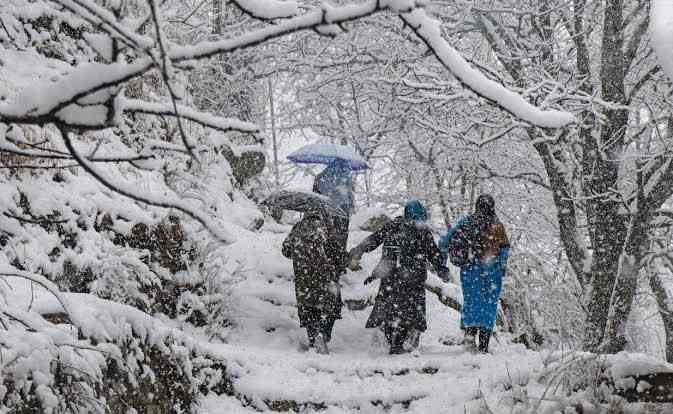
Arif said Western Disturbances have already increased in frequency and weak systems are expected to affect the region intermittently over the next two weeks, potentially bringing snowfall to higher reaches.

“Given the prolonged dry spell of over 50 days, it is reasonable to expect some precipitation in January unless unusual conditions persist,” he added—(KNO)

IBPS PO Mains Result 2025: Scorecard Released at IBPS.in — Direct Link to Download

0

IBPS PO Mains Result 2025: Scorecard Released at IBPS.in — Direct Link to Download

The Institute of Banking Personnel Selection (IBPS) has officially released the IBPS PO Mains 2025 scorecards on its website, ibps.in, for candidates who appeared in the Mains examination of the Probationary Officer (PO) recruitment. Aspirants can now check and download their scorecards using their login credentials.

Key Highlights

  • 📅 Scorecards Released: 10 December 2025
  • 🗓 Available Until: 17 December 2025
  • 🧾 Official Website: ibps.in
    Candidates are advised to download their scorecards before the availability window closes.

How to Download Your IBPS PO Mains Scorecard

Follow the simple steps below to access your scorecard:

  1. Visit the official IBPS website: ibps.in.
  2. Click on the link titled “IBPS PO Mains Result 2025 / Scorecard” on the homepage.
  3. Enter your Registration Number/Roll Number and Password/Date of Birth.
  4. Submit the details.
  5. Your scorecard will be displayed — download and save it.
  6. Print a hard copy for future reference.

What’s on the Scorecard?

The scorecard shows:

  • Section-wise performance
  • Overall marks
  • Candidate credentials (roll number, registration number, category) This allows candidates to clearly assess their performance in the Mains examination.

What Happens Next?

Candidates who qualify the mains exam will proceed to the interview (personality test) round. Interview call letters for the shortlisted aspirants have also been issued recently, and interviews will take place as per the schedule shared by IBPS. Performance in the interview stage will significantly influence the final selection.

Official Result Timeline

  • 📝 Mains Result Declaration: 1 December 2025
  • 📤 Scorecard Release: 10 December 2025
  • 🕐 Scorecard Access Ends: 17 December 2025

Important Notes

  • Ensure your login details (registration number and date of birth/password) are correct before attempting to download.
  • Keep multiple copies of the scorecard for document verification and interview stages ahead.
  • The scorecard is essential for understanding your qualifying status and next steps in the recruitment process.

CBSE Board Exam 2026: Important Instructions for Class 10 Students — What You Need to Know

0

CBSE Board Exam 2026: Important Instructions for Class 10 Students — What You Need to Know

The Central Board of Secondary Education (CBSE) has released crucial instructions for students appearing in the Class 10 Board Exams 2026, highlighting a major change in the answer-writing format for key subjects like Science and Social Science. These instructions aim to ensure fairness, reduce evaluation errors, and help students score better by following the board’s structured guidelines.

With approximately 45 lakh students expected to register for the CBSE Board Exams this year, these new rules are significant for every Class 10 candidate preparing for February–March 2026 examinations.


Why CBSE Has Issued New Instructions

In previous years, many students lost valuable marks because answers in subjects like Science and Social Science were written across different sections or mixed together, making evaluation difficult for examiners. To solve this ongoing issue and streamline the evaluation process, CBSE has made section-wise answer writing mandatory.

According to the official notice, answers written outside the designated space or mixed across sections will not be evaluated, and this policy will be strictly enforced even during verification or re-evaluation.


New Section-Wise Answer Writing Rules

Science Paper Format

CBSE has divided the Science paper into three distinct sections:

  • Section A: Biology
  • Section B: Chemistry
  • Section C: Physics

Students must divide their answer books into these three sections before they begin writing. Any answers must be written only in the designated section space.

Social Science Paper Format

The Social Science paper is now structured into four sections:

  • Section A: History
  • Section B: Geography
  • Section C: Political Science
  • Section D: Economics

As with Science, students must label the answer book appropriately and ensure all answers appear in their allocated sections.


Strict Evaluation Guidelines

CBSE has clearly stated that if a student writes answers:

  • Outside the designated space,
  • Mixed across multiple sections, or
  • Without clear separation between sections,

then those answers will be not evaluated and marks will not be awarded, regardless of the correctness of the content.

This rule applies during the evaluation process as well as during verification and re-evaluation after results are announced.

This policy underscores the board’s effort to improve fairness and uniformity in marking practices, and it places the onus on students to follow the rules conscientiously.


Exam Dates and Key Schedules

The CBSE Class 10 Board Exams 2026 are scheduled to be held from 17 February to 10 March 2026. Most exams will be conducted from 10:30 AM to 1:30 PM, with select subjects finishing by 12:30 PM.

The first exam will typically start with Mathematics (Standard and Basic), while the French paper will conclude the examination cycle.

Students should also keep track of additional guidelines such as:

  • Attendance requirements (at least 75% attendance in school)
  • Submission of internal assessments
  • Completion of all pre-exam formalities

These elements affect eligibility for the board exams and must be verified with respective schools.


How Schools Are Helping Students Prepare

CBSE has asked schools to integrate section-wise answer writing practice into regular classroom sessions and pre-board exams. This ensures that students are comfortable with the new format long before the actual board examinations.

Teachers are expected to:

  • Explain the section-wise structure in detail
  • Provide sample answer booklets
  • Conduct mock tests mimicking the official format

Such school-level preparation is vital, especially for students who may be appearing in board exams for the first time under this updated format.


Top Tips for Students to Avoid Mistakes

To perform well and avoid losing marks due to formatting errors, students should:

1. Clearly Divide Answer Books

Before attempting any question, label and divide your answer book according to the required sections for Science or Social Science.

2. Read Instructions Carefully

At the start of each exam, read the question paper and answer book instructions thoroughly to ensure full compliance.

3. Practice Regularly

Use sample papers and previous year question papers to practice section-wise writing. Schools have also been advised to provide these resources.

4. Manage Time Efficiently

Allocate time wisely within the exam to avoid rushing through sections and risk writing answers in the wrong area.

5. Ask for Clarification

If any part of the section-wise requirement is unclear, students should consult their teachers before the exam day.


Official Resources & Downloads

CBSE has released sample papers and official instructions on its website (cbse.gov.in) to help candidates and teachers understand the updated pattern. Students should download:

  • Section-wise Answer Booklet Format
  • Sample Question Papers
  • Exam Schedules
  • Board Circulars on evaluation norms

These documents provide authentic guidance on how the answers must be organized within the answer book.


What Happened in Past Exams

Traditionally, many students received complaints from evaluators because answers were written across sections or in a disorganized way. This led to rejections and lower marks for deserving students. The new CBSE instructions address this issue by enforcing discipline in answer presentation.


Conclusion: Be Prepared, Be Smart

The CBSE Class 10 Board Exam 2026 section-wise answer writing rules are one of the most important changes introduced in recent years. For students, understanding and following these instructions is not optional — it’s mandatory. Students who prepare for this new format and practice it consistently stand a much better chance of scoring high marks and avoiding unnecessary penalties.

Remember, good content written in the correct format earns marks. So plan, practice, and write with precision.

Nikon Scholarship Program 2025-26: Apply Online, Eligibility, Rewards & Last Date

0

Nikon Scholarship Program 2025-26: Apply Online, Eligibility, Rewards & Last Date

If you are passionate about photography and want to pursue a professional career in this creative field, the Nikon Scholarship Program 2025–26 brings you an excellent opportunity to turn your dream into reality. Launched under the CSR initiative of Nikon India Private Limited, this scholarship provides financial support to deserving students from economically weaker backgrounds who are enrolled in professional photography courses. Students can receive financial assistance of up to INR 1,00,000, making it easier to access quality photography education without financial stress.

In this detailed article, you will find complete information about the Nikon Scholarship Program 2025–26, including its eligibility criteria, rewards, application process, last date, required documents, and how to apply online.


📌 About Nikon Scholarship Program 2025–26

Photography has grown into a full-time profession with high demand in fields such as journalism, advertising, fashion, media production, documentary filmmaking, wildlife and wedding photography. Many talented students aspire to learn photography professionally, but financial limitations often become a major barrier.

Understanding this problem, Nikon India Pvt. Ltd. launched the Nikon Scholarship Program to help underprivileged yet talented students pursue professional photography courses of a minimum 3-month duration. This CSR initiative aims to:

  • Promote creativity
  • Support skill development
  • Encourage young talent
  • Ensure quality training without financial burden

🎓 Key Highlights of Nikon Scholarship Program 2025–26

Particulars Details
Scholarship Name Nikon Scholarship Program 2025–26
Conducted By Nikon India Private Limited
Course Eligible Professional photography courses (minimum 3 months)
Scholarship Amount Up to INR 1,00,000
Application Mode Online
Last Date to Apply 12 December 2025
Short Link for Application www.b4s.in/ksty/NIKON13
Available Through Buddy4Study Portal
Eligible Students Indian citizens from underprivileged backgrounds

📝 Eligibility Criteria

To apply for the Nikon Scholarship Program 2025–26, students must fulfill the following conditions:

✔ Applicant must be an Indian citizen
✔ Must be pursuing a professional photography-related course of at least 3 months duration
✔ Must have passed Class 12
Family annual income must be less than or equal to INR 6,00,000
✖ Children of Nikon India Pvt. Ltd. employees and Buddy4Study employees are NOT eligible

If you meet all these criteria, you can easily apply online and avail financial support for your photography career.


💰 Scholarship Rewards & Benefits

Students selected under the Nikon Scholarship Program 2025–26 will receive:

  • Financial assistance up to INR 1,00,000
  • Based on the actual course fees submitted
  • Support for pursuing professional photography education
  • Opportunity to learn from reputed institutes

📌 Note: The scholarship amount will be calculated according to the actual fee structure provided by the student.


📎 Documents Required for Application

Candidates must upload the following documents in scanned format:

  • Aadhaar Card or valid ID proof
  • Passport-size photograph
  • Class 12 mark sheet/certificate
  • Admission proof (Fee receipt, Student ID, or Enrollment letter)
  • Income Certificate (Issued by competent authority)
  • Bank account details (Passbook copy)
  • Course fee structure from the institute
  • Family income proof (Salary slip, ITR, income certificate, etc.)

💻 How to Apply Online for Nikon Scholarship 2025–26?

Follow the steps below to complete your application:

👉 Step-by-Step Application Process

  1. Visit the official short URL: www.b4s.in/ksty/NIKON13
  2. Register or log in using your mobile number/email.
  3. Search for Nikon Scholarship Program 2025–26
  4. Click on “Apply Now”
  5. Fill out the application form with correct personal and academic details.
  6. Upload the necessary documents.
  7. Submit your application and download the acknowledgment receipt for future reference.

📅 Important Dates

Event Date
Application Start Date Ongoing
Last Date to Apply 12 December 2025

⚠️ Don’t wait for the deadline. Apply early to avoid technical issues.


🎯 Why You Should Apply for Nikon Scholarship?

  • Ideal opportunity for students who want to become professional photographers.
  • Helps reduce or fully cover the photography course fees.
  • Encourages artistic talent from economically weaker backgrounds.
  • Opens the door to careers in media, fashion, wildlife photography, advertising, cinematography, and more.

🌟 About Nikon India CSR Initiative

Nikon India, a leader in imaging products and optical instruments, not only manufactures world-class photography equipment but also promotes visual creativity through social initiatives. The Nikon Scholarship is part of its mission to support youth talent and uplift underprivileged communities through skill-based education.


📌 Final Words

The Nikon Scholarship Program 2025–26 is a golden opportunity for aspiring photographers from low-income families. With financial assistance of up to INR 1,00,000, students can receive professional training and build a promising career in photography. If you are passionate about capturing moments and turning creativity into profession, don’t miss this scholarship.

📍 Apply Now: www.b4s.in/ksty/NIKON13
📆 Deadline: 12 December 2025

GMC Srinagar Issues Notification for Senior Resident OMR Examination 2025: Check Date, Departments, Admit Card, Instructions

0

GMC Srinagar Issues Notification for Senior Resident OMR Examination 2025: Check Date, Departments, Admit Card, Instructions

The Government Medical College (GMC), Srinagar has officially released Notification No. 47-EC of 2025, announcing the schedule and important guidelines for the OMR-based written examination for the selection/engagement of Senior Residents in multiple specialties. The notification is dated 10-12-2025 and applies to candidates who have applied against Advertisement Notice No. 13 of 2025, dated 11.10.2025, & Amendment Notices 14 and 16 of 2025.

As per the notification, the examination will be held in the Anatomy Lecture Hall of GMC Srinagar on December 17, 2025 (Wednesday) from 02:00 PM to 03:00 PM. Candidates are required to strictly follow the rules and instructions issued by the college.


Departments for Which GMC Srinagar Will Conduct the Exam

Candidates applied for the post of Senior Resident in the following departments:

No. Department
1 Dermatology
2 Community Medicine
3 Obstetrics & Gynaecology
4 Radiology
5 Physiology
6 Radiation Oncology
7 Surgery
8 Gastroenterology
9 ENT
10 Microbiology
11 Ophthalmology
12 Psychiatry
13 Radiodiagnosis & Imaging
14 Immuno-Haematology & Blood Transfusion
15 Physical Medicine and Rehabilitation
16 Urology

Exam Date and Venue

  • Date: December 17, 2025 (Wednesday)
  • Time: 02:00 PM to 03:00 PM
  • Venue: Anatomy Lecture Hall, GMC Srinagar

Admit Card Availability

The notification states that Admit Cards/Roll Number Slips will be available from December 12, 2025, and can be downloaded from the candidate’s registered accounts on the GMC application portal. Candidates must download the colored admit card copy and carry it to the exam center.


Important Instructions for the Examination

Candidates must follow the instructions strictly as any deviation may result in disqualification or cancellation of candidature.

Reporting Time

  • Candidates must report 30 minutes before the scheduled exam time for identity verification and document check.

Documents Required

Candidates must bring:

  • Admit Card (colored printout)
  • Any one valid Photo Identity Card issued by a competent authority:
    • Driving License
    • PAN Card/Aadhaar Card
    • Any Government-issued Photo ID

Candidates who fail to produce valid documents will not be allowed to sit for the examination.


Exam Guidelines and Prohibited Items

The notification strictly prohibits the following:

  • Mobile phones
  • Bluetooth Devices
  • Smart Watches and Scanners
  • Tablets, Laptops, Earphones
  • Books, Notebooks, Calculators
  • Any electronic device

Violation of this rule will lead to strict legal action and immediate disqualification.

Pen and OMR Instructions

  • Candidates should use Blue or Black ballpoint pen only to mark answers on OMR sheets.
  • Scratching, overwriting, tick-marking or multiple answers will be considered wrong.
  • Do not make unnecessary marks or stray lines on the OMR sheet.

Strict Disciplinary Action for Misconduct

Attempting to cheat, help others, communicate during the exam, or carry prohibited material will result in:

  • Immediate cancellation of the exam
  • Permanent disqualification
  • Possible legal action

Validity of Admit Card

The notification clarifies that the issuance of the admit card does not guarantee eligibility or appointment. The selection will be confirmed only after verifying that the candidate meets all eligibility criteria. If at any stage it is found that the candidate doesn’t fulfill requirements, his/her candidature will be canceled without prior notice and without any claim against GMC Srinagar.


Official Statement

The notification has been signed by Prof. (Dr.) Iffat Hassan Shah, Principal/Dean, Government Medical College, Srinagar.

GMC Srinagar advises all aspirants to follow official notifications on the college’s official website:

➡️ Official Website: www.gmcs.ac.in


What Candidates Should Do Before the Exam? (Checklist)

To help aspirants prepare hassle-free, here is a last-minute checklist:

✔️ Download Admit Card in color
✔️ Carry valid photo ID
✔️ Reach the exam center early
✔️ Carry blue/black pen only
✔️ Do not carry electronic items
✔️ Read instructions on admit card carefully


Why This Examination Matters?

The Senior Residency program is crucial for medical postgraduate development and essential for medical colleges to meet MCI/NMC teaching norms. Getting selected as a Senior Resident at GMC Srinagar offers candidates:

  • Strong academic and clinical exposure
  • Opportunities in research and specialty training
  • Career advancement in teaching & clinical medicine

Thus, this selection exam holds significant value for medical professionals seeking advanced specialization.

Detailed Notifications Here

The written OMR-based examination for the engagement of Senior Residents in GMC Srinagar is scheduled for December 17, 2025. Candidates are advised to strictly follow the rules, carry all required documents, and stay updated by checking the official website regularly.

For the latest updates on GMC Srinagar recruitment, exams, results, and medical education opportunities in Jammu & Kashmir, keep visiting our website..

JKPSC Releases Multiple Interview Schedules for Lecturer & Associate Professor Posts

0

JKPSC Releases Multiple Interview Schedules for Lecturer & Associate Professor Posts

The JKPSC has published new interview schedules for several teaching positions under the School Education and Higher Education Departments. This update is crucial for all shortlisted candidates — make sure to download the official PDFs and check your interview date, venue, and instructions carefully.

📢 What’s New

  • Interview schedule for Lecturer – Punjabi (School Education Department)
  • Interview schedule for Associate Professor (Architecture) (School of Architecture, Higher Education Department)
  • Interview schedule for Lecturer – Kashmiri (School Education Department)

Below is a table summarizing the available interview schedule notices along with direct PDF links.

Interview Schedule Links

# Post & Department Interview Schedule / Notice (PDF)
1 Lecturer – Punjabi, School Education Department [Download PDF] (https://jkpsc.nic.in/Pdf/Downloader1.ashx?nid=17499&type=n)
2 Lecturer – Punjabi, School Education Department (Alternate) [Download PDF] (https://jkpsc.nic.in/Pdf/Downloader1.ashx?nid=17500&type=n)
3 Associate Professor (Architecture), Higher Education Department [Download PDF] (https://jkpsc.nic.in/Pdf/Downloader1.ashx?nid=17501&type=n)
4 Lecturer – Kashmiri, School Education Department [Download PDF] (https://jkpsc.nic.in/Pdf/Downloader1.ashx?nid=17501&type=n)

⚠️ Note: Some links may share the same nid parameter — please ensure you download and cross-verify the correct file before making any arrangements.


About JKPSC and the Recruitment Context

The JKPSC is the constitutional recruitment agency of Jammu & Kashmir, responsible for filling government vacancies in various departments based on merit and reservation norms.

In 2025, the JKPSC advertised 575 vacancies for School Lecturer positions across multiple subjects under the School Education Department.

Candidates who cleared the written examination stage are now being called for interviews / viva voce as per the schedule released recently.


How to Publish Such Interview Schedule Pages — SEO Best Practices

When publishing interview schedules and PDFs on your website, following certain best practices helps ensure good visibility and user-friendliness:

  • Use clear, descriptive headings and subheadings (e.g. “JKPSC Interview Schedule – Lecturer Punjabi 2025”). This helps with readability and SEO.
  • Keep paragraphs short, and use bullet points or tables (like the one above) for easy scanning.
  • Ensure PDF filenames are SEO-friendly, using keywords and descriptive terms. E.g. jkpsc-lecturer-punjabi-interview-schedule-2025.pdf rather than document1.pdf.
  • Link to PDFs using descriptive link text, and optionally embed PDF previews using <iframe> or <embed> / <object> HTML tags for improved UX.
  • Provide a clear context on the page (what the PDF is about, why it matters, how to use it) rather than just raw links — this helps search engines and users.

Implementing these practices ensures your page — and the linked PDFs — are more likely to be indexed properly by search engines and be accessible to users on mobile and desktop alike.


Important Note for Candidates

Candidates must verify the correct PDF before preparing for the interview, as there may be multiple notices for similar posts (e.g., two different “Lecturer – Punjabi” links). Always check your roll number, interview date, time, and venue as mentioned in the PDF.

Also, as per standard procedure of JKPSC, candidates should carry their Interview Call Letter, a valid photo-ID, academic certificates, passport-size photos, and any required experience or category certificates to the interview.


Conclusion

The latest release of interview schedules by JKPSC is a vital update for many candidates seeking teaching jobs under the School and Higher Education Departments. By providing direct PDF links and summarizing them clearly, this article aims to make it easier for aspirants to access and act upon the information.

Be sure to download the correct PDF, double-check all details, and prepare all required documents well in advance.